
The Problem with Completion-Only Training
Mandatory training has traditionally been measured by one metric: completion.
- Did the staff member do the module?
- Did they click through to the end?
These questions are answerable. The harder question: whether they actually learned anything - rarely gets asked, let alone answered.
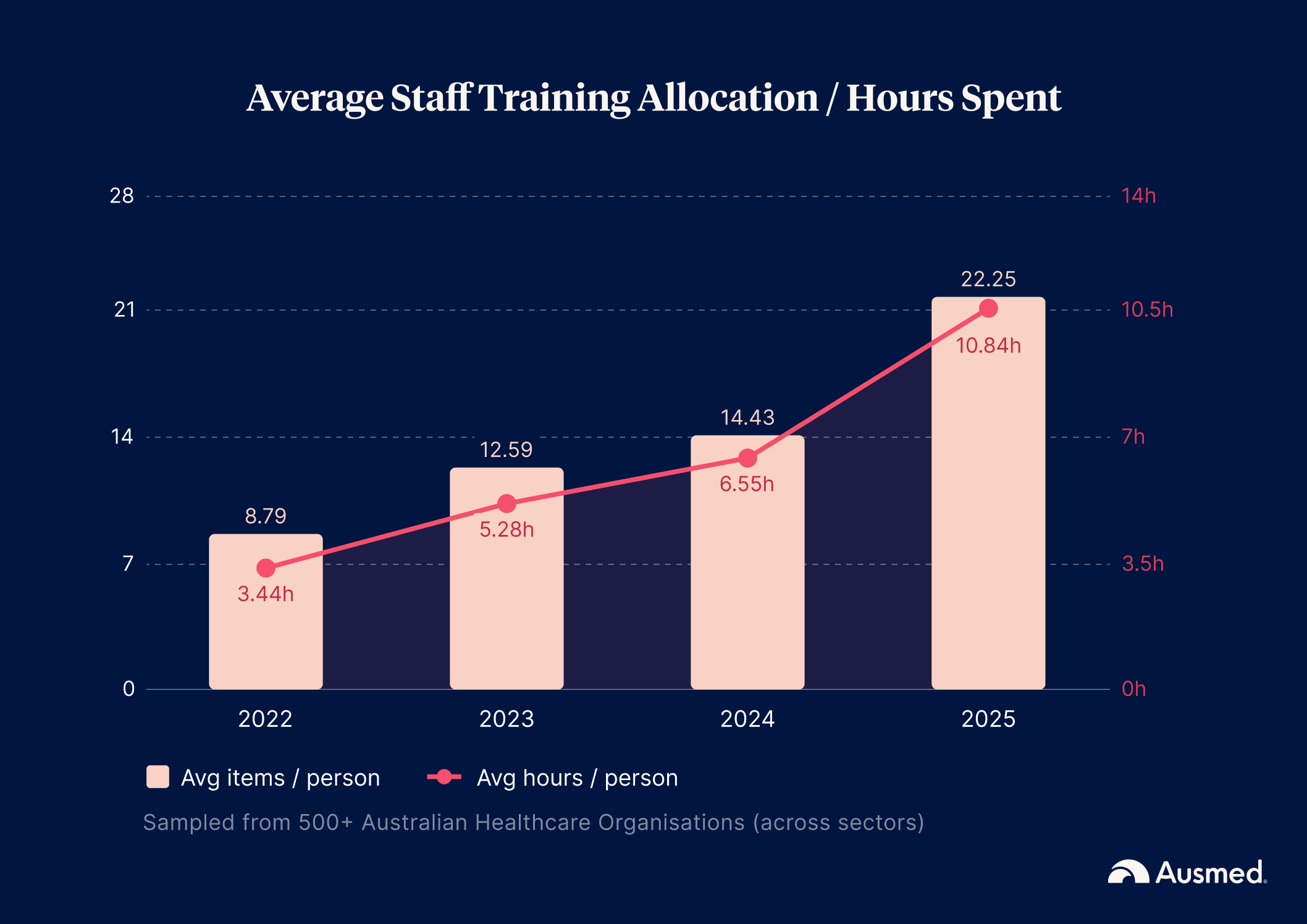
This matters because training volume is increasing.
The increase is appropriate - it reflects genuine regulatory change and rising expectations for the quality and safety of care. But more training does not automatically mean more learning. Without a way to distinguish between the two, organisations carry a growing cost without a clear view of what it is delivering.
Aged and Home Care: A Live Example
The strengthened Aged Care Quality Standards, in effect from 1 November 2025, have introduced significantly greater training requirements across the sector. Providers are investing more hours, more staff time, and more resources in mandatory learning than at any previous point.
Training hours are up. Seat time is up. Costs are up.
The compliance bar has also shifted. Auditors are no longer asking whether training happened. They are asking whether it worked: whether staff can demonstrate knowledge, and whether the organisation has a system to verify that.
What Other Sectors Can Expect
Aged care is not alone in this. Across healthcare, regulation is evolving, and training is the primary vehicle through which regulatory change is driven into practice. When standards change, training requirements follow. That pattern is consistent and is accelerating.
The pattern is consistent with what aged care has already experienced: reform drives requirements, requirements drive training.
The question every sector is now facing is the same one aged care is grappling with today:
As training volume increases, how do we ensure it is targeted, effective, and worth the investment?
Continuing to measure completion alone will not answer that question.
What is Knowledge Verification?
Knowledge Verification (KV) is a structured, summative pre-assessment that allows a learner to demonstrate their existing knowledge before completing a mandatory training module. If their knowledge meets the required standard, the assignment is recorded as complete. If gaps are identified, they proceed to complete the full module.
It is not a shortcut. It is not a way to skip training. It is a more honest and rigorous approach to assessing whether training is actually needed in the first place.
It verifies knowledge. It does not assess skill, replace workplace observation, or serve as a substitute for competency-based education.
Those are different tools, for different purposes, and both remain necessary.
The Educational Case
KV is grounded in three well-established educational frameworks.
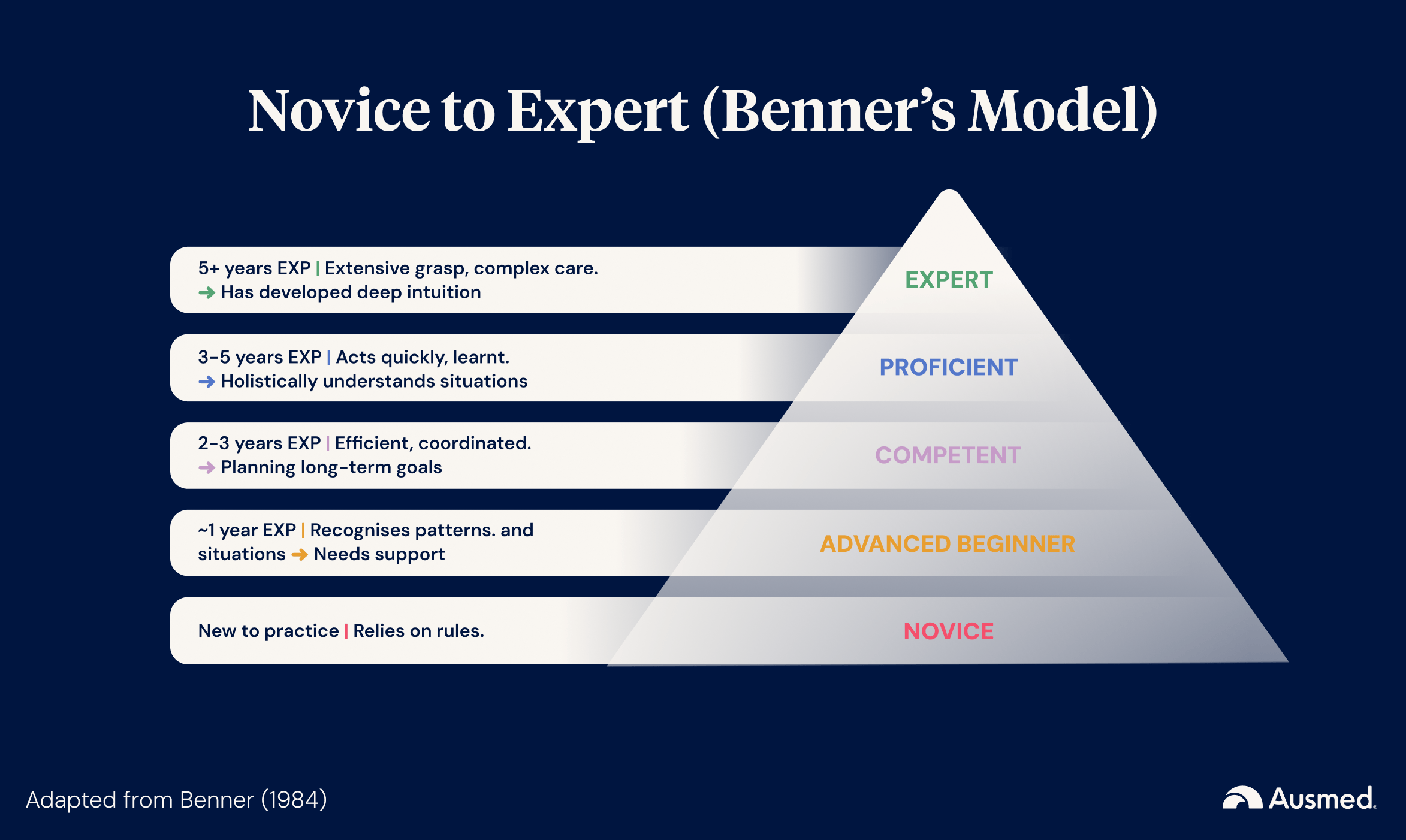
1. Benner's Novice to Expert Model
Benner's Novice to Expert Model reminds us that expertise develops through experience, not repetition of the same content. Repeating a module someone has completed many times and uses daily does not build capability - it consumes time that could be directed to something more meaningful.
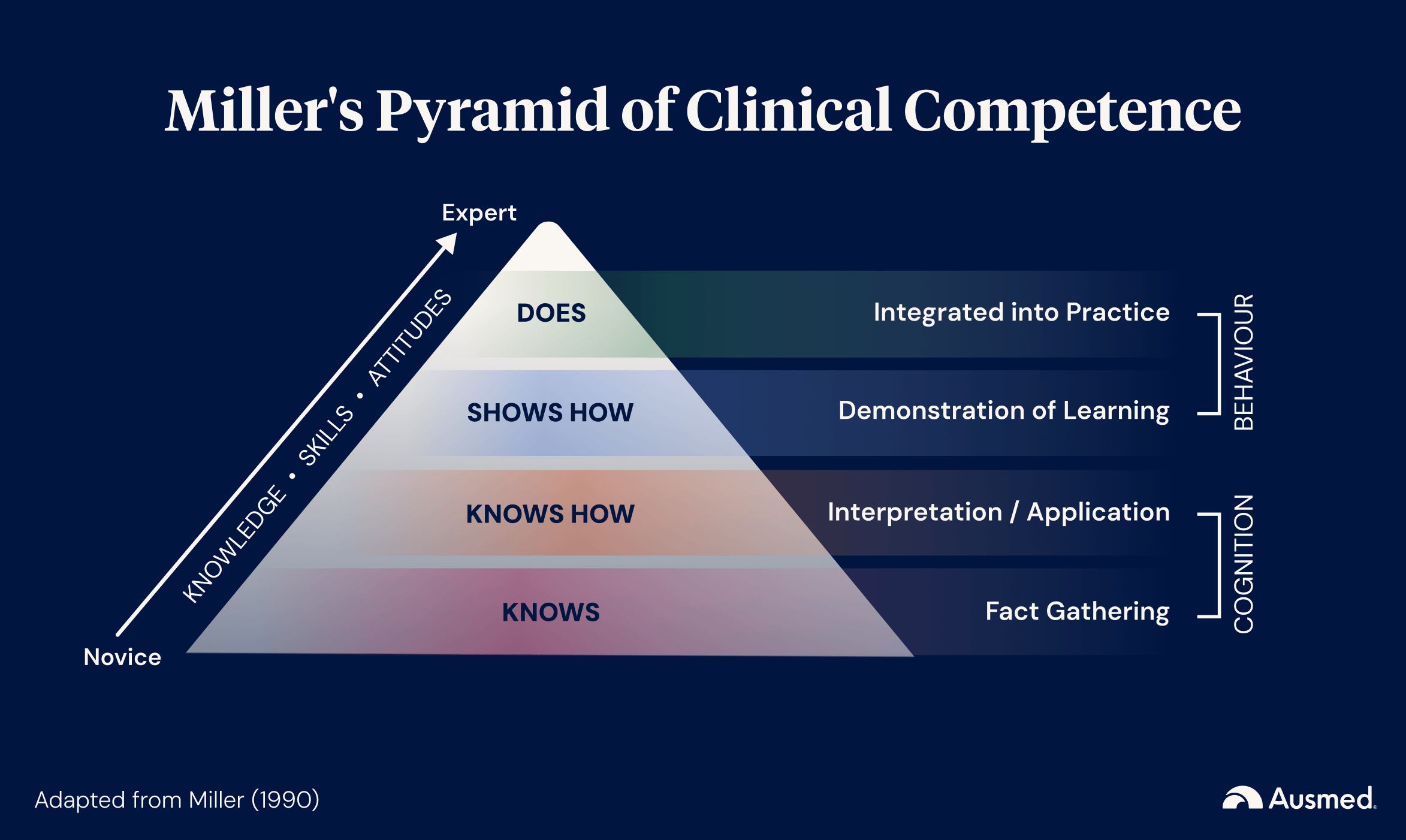
2. Miller's Pyramid of Clinical Competence
Miller's Pyramid of Clinical Competence establishes that knowledge must be verified before skills or practice can be meaningfully assessed. KV operationalises this: confirm the knowledge is there first, then build on it.
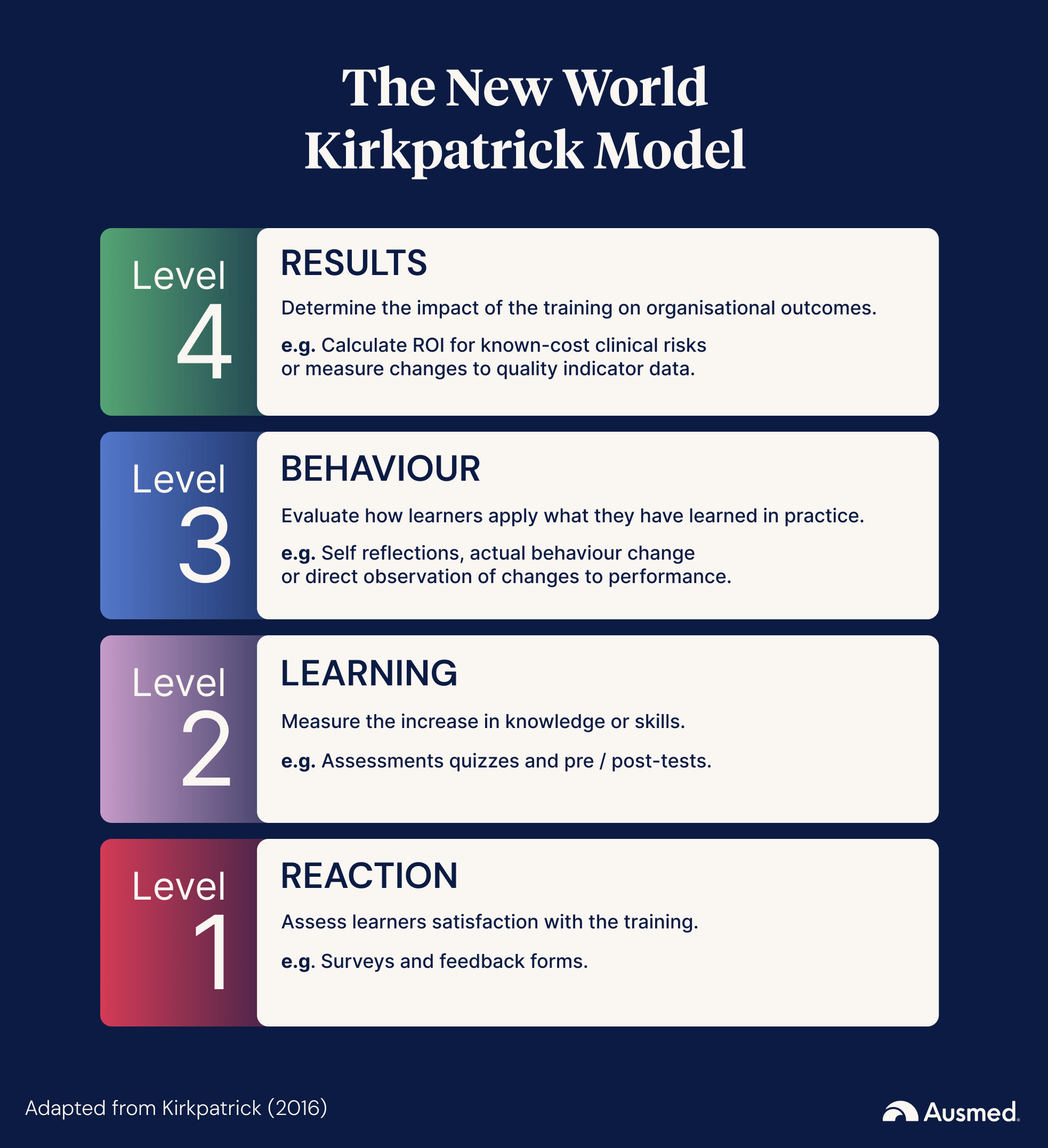
3. The New World Kirkpatrick Model
The New World Kirkpatrick Model describes four levels of training evaluation. Most organisations measure Level 1 - did staff complete training? KV moves organisations to Level 2 - Did they actually learn anything?
This is a meaningful shift, and one that is essential given the costs invested in training, and that auditors are increasingly expecting providers to demonstrate.
How KV Works in Practice
When KV is enabled on an eligible module in Ausmed Learn, the learner is presented with the assessment, rather than automatically commencing assigned training. Questions are drawn from a randomised bank aligned with the module's learning outcomes and are presented in multiple-choice and true/false formats.
There are a few important design features worth understanding:
- Learners cannot backtrack between questions.
- Feedback is shown only after the full assessment is complete.
- A visual timer is present throughout.
- Learners can opt out at any time and proceed directly to the full module. This is an intentional feature, designed to support psychological safety, not a workaround.
If the learner meets the required pass mark, the assignment is recorded as complete, with 'Knowledge Verification' noted as the completion method. If they do not meet the threshold, they are directed immediately into the full module. No attempt is marked as complete until learning requirements are satisfied.
For organisations using their own LMS, KV is delivered as a standalone SCORM assessment, with the full module delivered separately.
Not Every Module is Eligible, and That is the Point
KV is not available across the entire Ausmed library, and that is by design. A structured, risk-based eligibility process determines which modules are appropriate for KV.
Modules are excluded where:
- The topic carries high clinical risk (for example, medication safety or basic life support).
- There is significant reliance on psychomotor skills (for example, manual handling).
- Guidelines are updated frequently, and content currency is critical (for example, mandatory reporting requirements).
- The regulatory scrutiny of the topic is particularly high.
Eligibility is a safeguard built into the product. If a module is not eligible for KV, there is a reason. Organisations are encouraged to ask if they are unsure about a specific topic.
Currently, approximately 40 modules are eligible for KV in Ausmed Learn, with more being added progressively as the evidence base grows. You can view eligible modules via the Ausmed KV Savings Calculator.
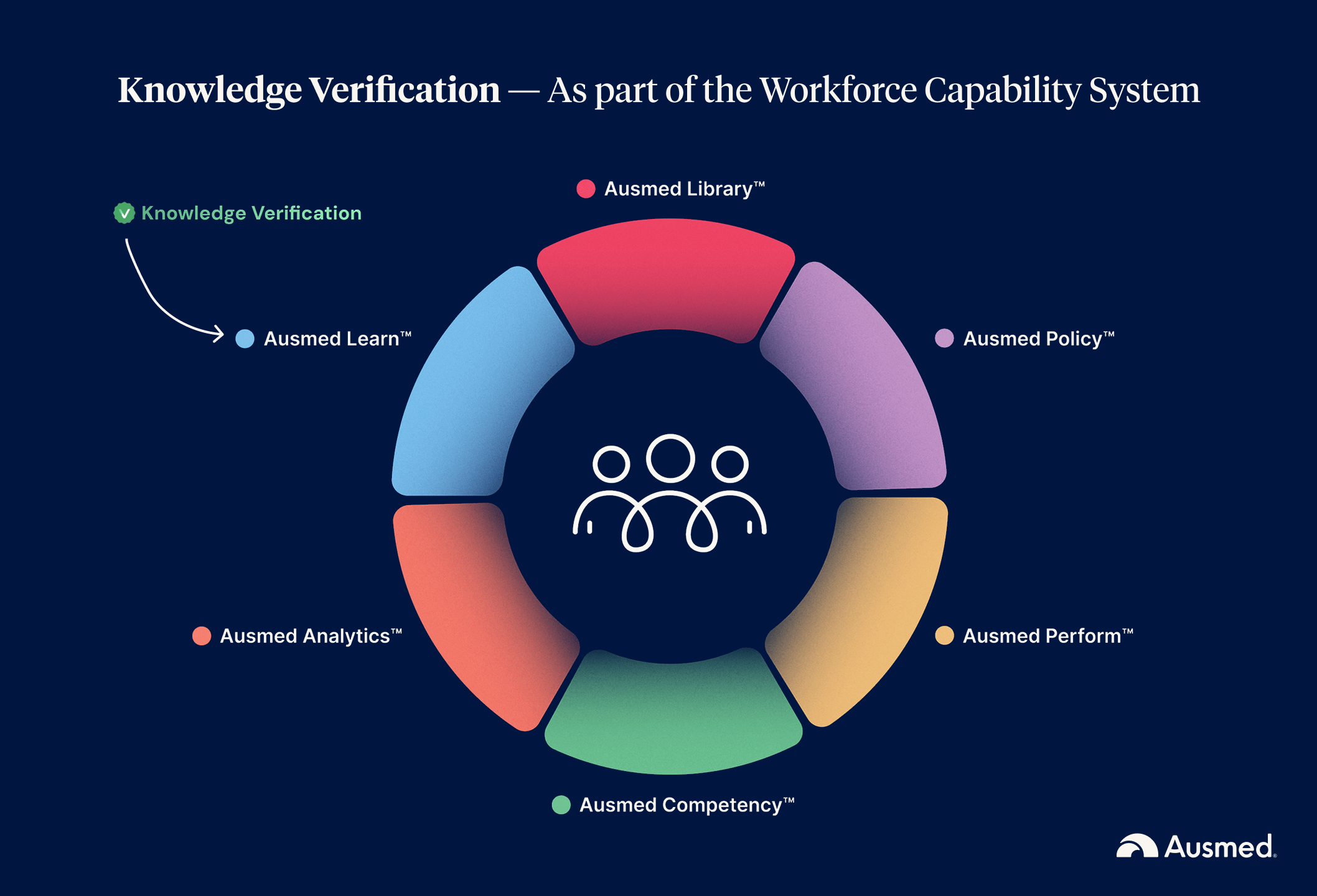
KV as Part of Your Training System
KV generates evaluation data. It tells you what your workforce actually knows - not just whether they clicked through a module. Over time, this data can inform training needs analyses, identify persistent knowledge gaps, and help direct resources to where they are most needed.
However, this data is only meaningful within a broader training system. KV as a standalone strategy is not sufficient, and it is not designed to be. Providers who will get the most from it are those who can situate it within a coherent plan-implement-evaluate cycle: using the results to inform what training is assigned, to whom, and how frequently.
From an audit perspective, Ausmed's external advice is consistent:
Language Really Matters
How KV is communicated to staff significantly affects how it is received. Some framing to avoid:
- 'Test' - implies high stakes and punishment for getting it wrong.
- 'Skip training' - misrepresents what KV does and undermines its integrity.
- 'Pass or fail' - introduces a punitive frame that is inconsistent with its intent.
- 'Competency assessment' - KV does not assess competence. This conflation creates both educational and governance risk.
More accurate framing:
- 'A way to demonstrate what you already know.'
- 'Part of how we understand where to focus your development.'
- 'A tool that helps us move from tracking completions to tracking comprehension.'
Psychological safety is built into KV's design. The opt-out option exists for a reason. Staff should understand that choosing to complete the full module is entirely valid and never penalised.
What KV Cannot Do
KV verifies knowledge at a point in time. It does not:
- Assess whether a staff member can perform a skill safely in practice.
- Replace the competency-based education requirements.
- Serve as the sole evidence of a training system.
Knowing something and doing something are different things. KV addresses the first. Competency assessment, direct observation, and workplace performance processes address the second. Both are necessary, and neither substitutes for the other.
Getting Started
If you are considering introducing KV to your organisation, here are a few practical starting points:
- Review eligible modules and consider which are most appropriate for your context and risk appetite.
- Configure your pass mark and prior completion requirements in line with your governance framework.
- Update your L&D strategy documentation to position KV explicitly within your training system, not as a standalone tool. See an article I've written on effective training systems for guidance.
- Communicate clearly with staff before rollout, using language that frames KV as a recognition of expertise rather than a test.
- Use KV results as evaluation data: where are the gaps? What does that tell you about where training effort should be directed next year?
For more information on Knowledge Verification, including video walkthroughs of the staff and manager experience, view the launch webinar recording.