


Ausmed is a Trusted Information Partner of Healthdirect Australia. Verify here.


© 2026 Ausmed Pty Ltd (ABN: 33 107 354 441)
Enteral feeding, tracheostomy, ventilator support, complex bowel care. For each of the eight, the module asks for training tied to a named descriptor, specific to the participant receiving the support, and delivered by someone qualified to deliver it.
Book a walkthroughIf you deliver high intensity daily personal activities you are assessed, against the Core Module and the High Intensity Daily Personal Activities supplementary module on top of it. The module is short. What makes it demanding is that it names eight supports separately and writes almost the same three requirements under each one, and one of those three is a sentence about training that most providers cannot evidence as written.
Each of the eight requires a plan developed with the participant, policies and procedures that include a training plan for workers, and training that is participant-specific, tied to the relevant High Intensity Support Skills Descriptor, and delivered by someone the module qualifies to deliver it. A generic module completed once does not satisfy that sentence, and a completion report does not evidence it.
 NDIS Practice Standards · High Intensity Daily Personal Activities Module
"All workers working with a participant requiring complex bowel care have received training, relating specifically to each participant’s needs, type of complex bowel care and high intensity support skills descriptor for providing complex bowel care, delivered by an appropriately qualified health practitioner or person that meets the high intensity support skills descriptor for complex bowel care."
Read it closely and it asks for three things at once. The training has to be about that participant, not about the procedure in general. It has to be mapped to the named descriptor. And it has to have been delivered by a qualified person, which means the delivery itself is part of the evidence, not just the completion.
The same sentence, with the support name changed, sits under seven of the eight. Severe dysphagia management is written differently, and more tightly.
"… delivered by an appropriately qualified health practitioner with expertise in severe dysphagia management."
A provider who treats all eight as one training category will be in danger of non-compliance.
The module names these eight separately and writes a training requirement under each. A worker cleared for one is not cleared for the others, and the evidence has to be held that way.
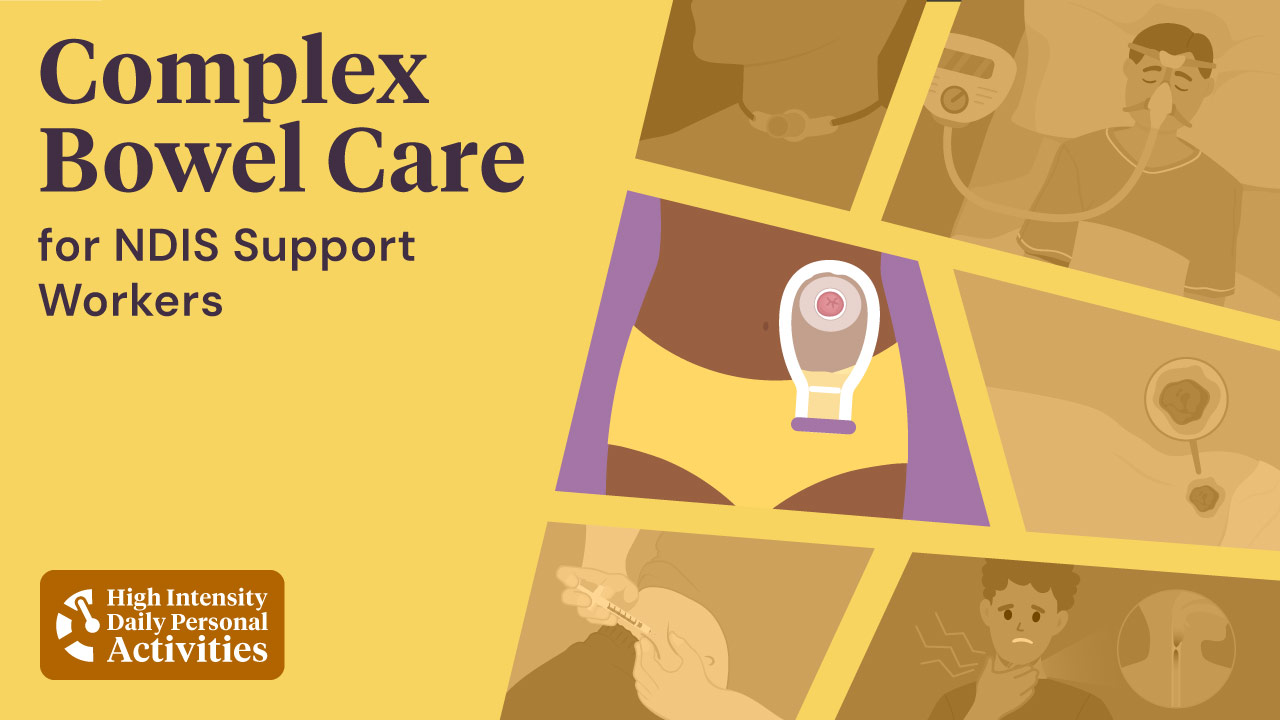
Enemas, suppositories and recognising when a bowel routine is going wrong.
View the module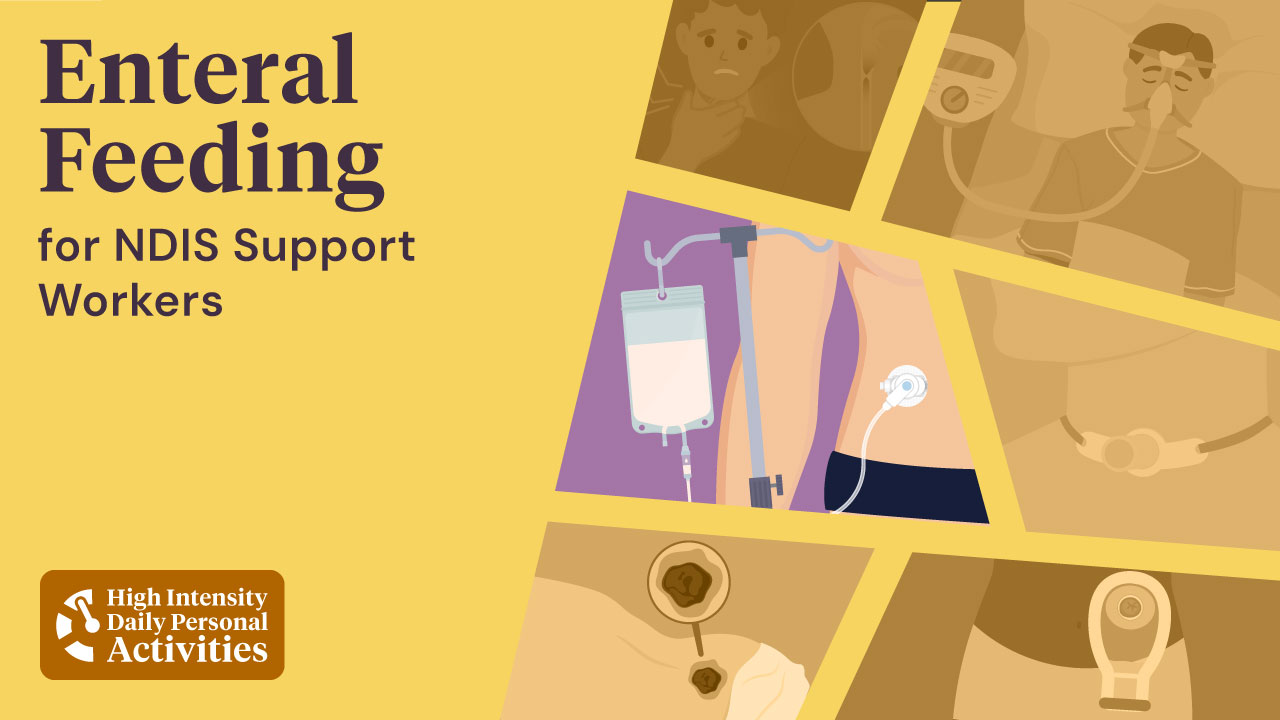
PEG and nasogastric feeding, tube care, and what to do when a tube blocks.
View the module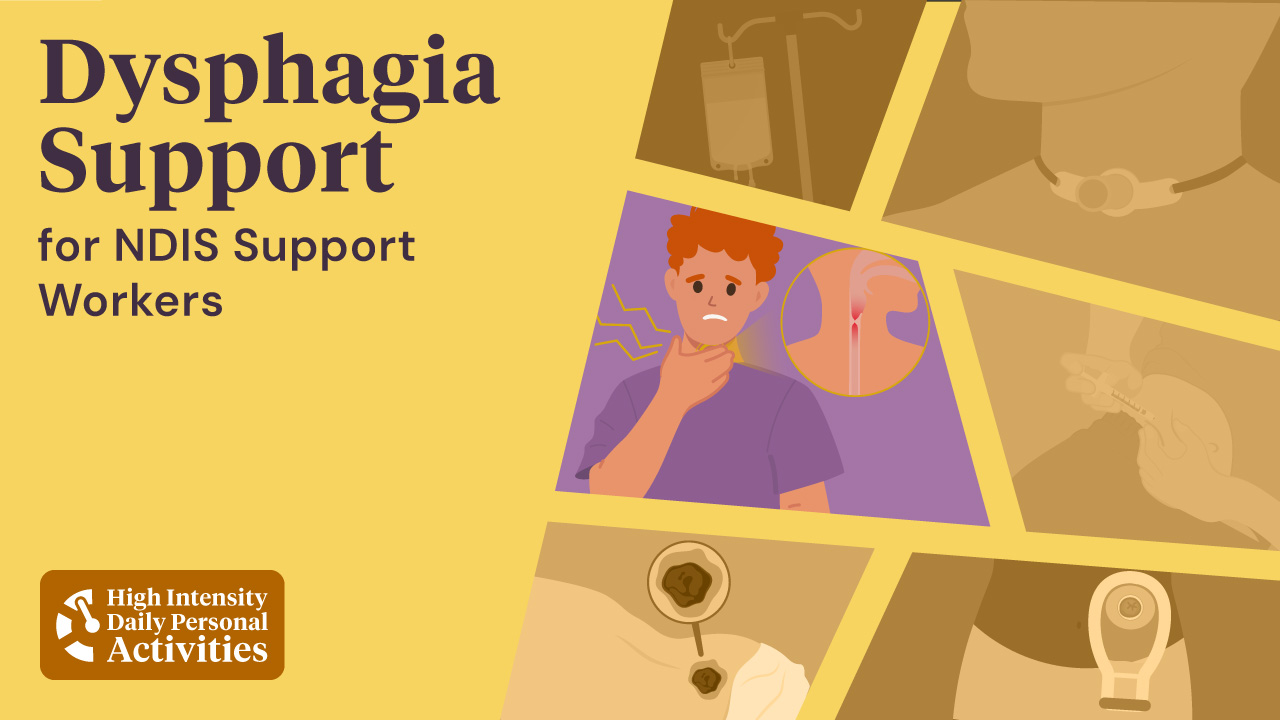
Mealtime management to a speech pathologist’s plan, including texture and posture.
View the module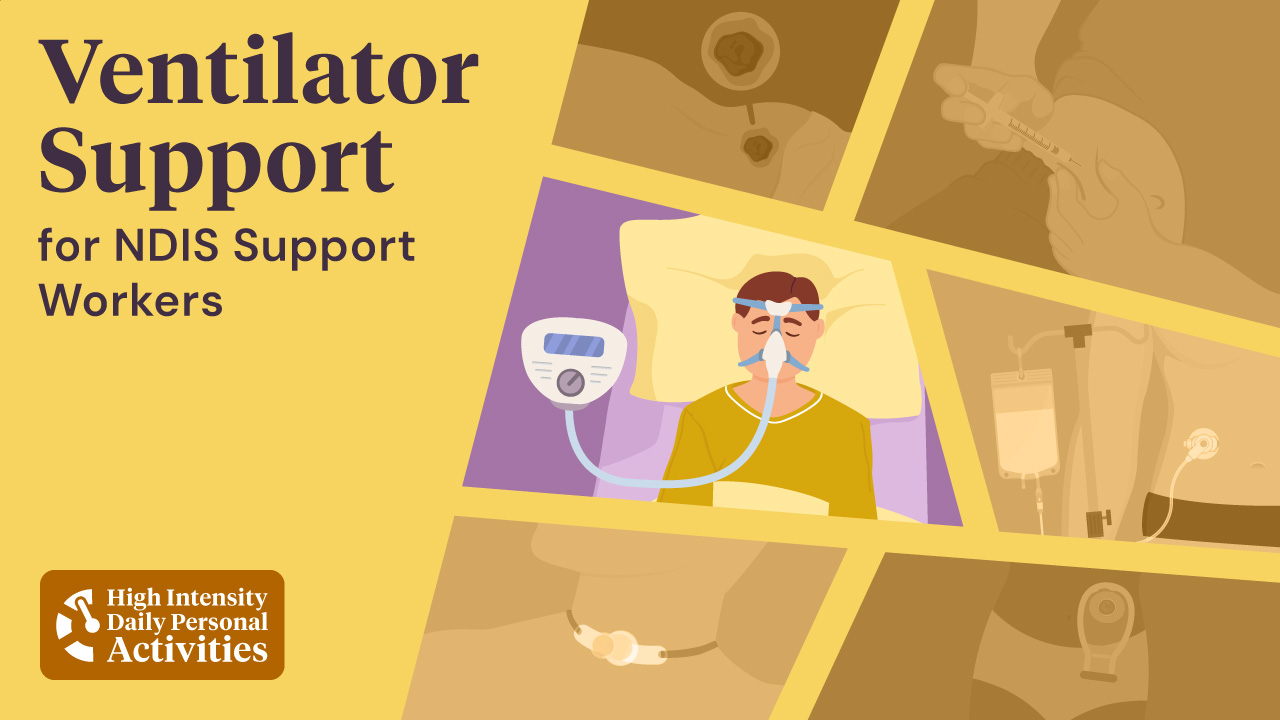
Invasive and non-invasive support, with the alarm response that goes with it.
View the module
Suctioning, tube care and emergency response, in the participant’s own home.
View the module
In-dwelling, in-out and suprapubic, each with its own technique and its own risk.
View the module
Preparation, administration, and the escalation path when a dose is missed.
View the module
Recognising a seizure, following that participant’s plan, and knowing when to escalate.
View the moduleEvery provider delivering these supports trains people for them. The training is usually good and often delivered by a clinician. What falls over is the record: who was assessed, by whom, when, against which participant, and whether that is still current today.
That record is typically a signed paper form in a filing cabinet in the house, a clinician’s email, and a service manager who knows. An auditor asking for the current competency status of the eleven workers rostered to a participant with a tracheostomy is asking a question that takes a week to answer.
A participant with enteral feeding and complex bowel care generates two requirements, each with its own training and its own assessment, attached to that participant rather than to a job role.
Assigned automatically to anyone allocated to that participant, through the same training plan mechanic as everything else.
The module allows an appropriately qualified health practitioner, or a person who meets the high intensity support skills descriptor for that support, to deliver the training. Either way the sign-off is completed in the setting, on a phone, by a named person, and the record carries who they were.
Date expiry, not a game of memory. When the date lapses, or when the participant’s plan changes, the requirement reopens.
A tracheostomy suction assessed in a classroom on a mannequin is evidence of something, but not of what the descriptors ask. Team leaders and clinicians complete the assessment on a phone, in the house, with the participant’s own equipment, and the record carries the date, the assessor and the setting.
How competency works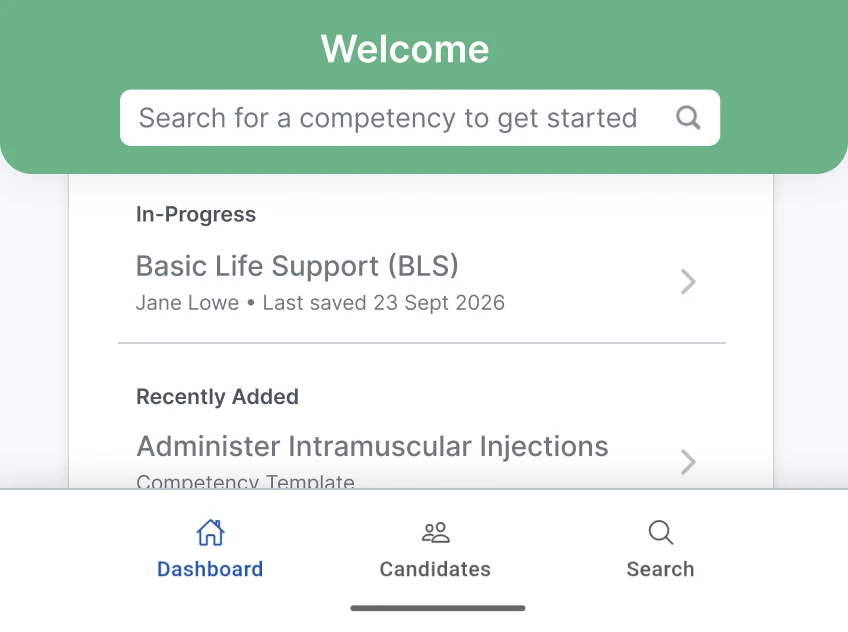
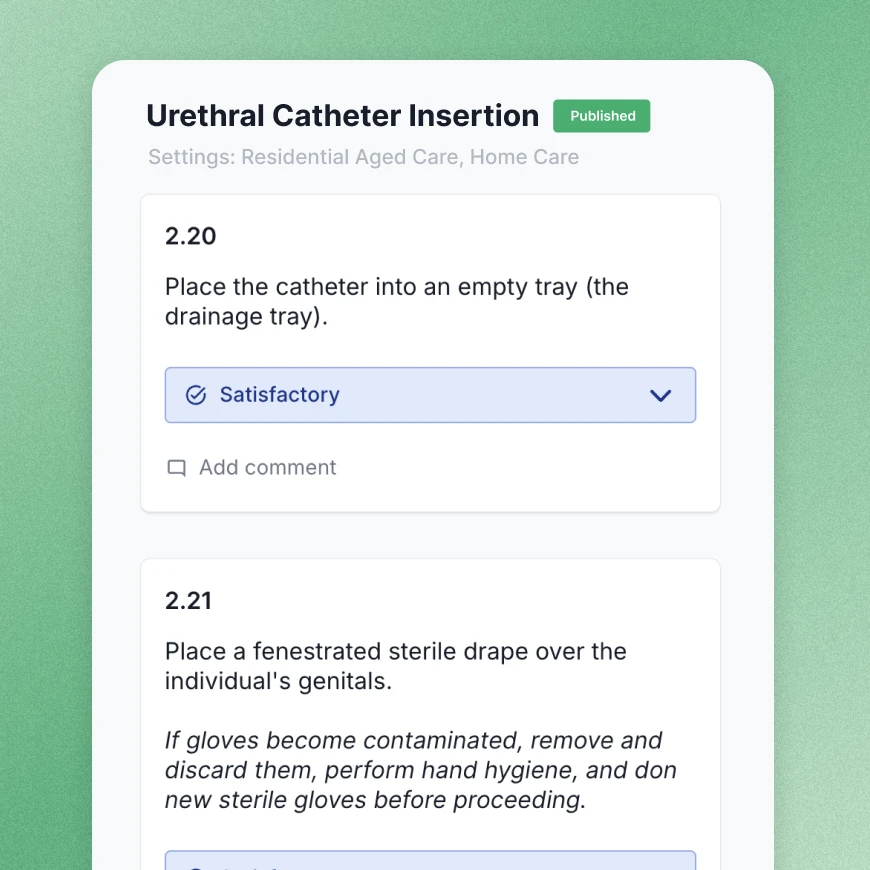
The unit of evidence is not the worker and it is not the module. It is the combination: this worker, this support, this participant, signed off on this date by this person. That is the shape of the question an auditor asks, so it is the shape the record has to be in.
A worker who has been off the roster, or on a different house, or away from that support for a stretch, is a worker you have to make a decision about, and the decision is easier to defend if it was made by a rule rather than by whoever noticed.
Set the interval you are prepared to defend and let the system hold it, rather than relying on a team leader to remember who has been away.
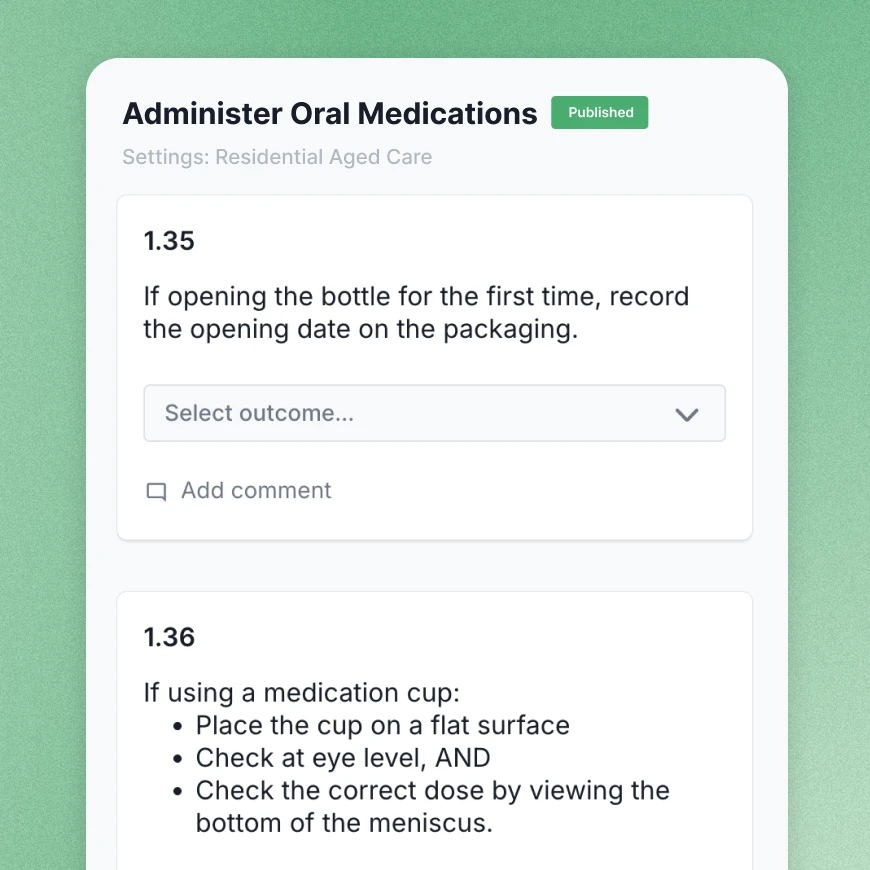

The requirement attached to the person who needs it, not to a job role.
Participant PlansPick a participant with high intensity supports and we will walk through what you can evidence about their support team today, and how long it takes you to produce it.
For seven of the eight, the module says "an appropriately qualified health practitioner or person that meets the high intensity support skills descriptor" for that support. So a senior support worker who meets the descriptor themselves can deliver it, which is how most providers make this workable at scale. Severe dysphagia management is the exception: it requires "an appropriately qualified health practitioner with expertise in severe dysphagia management", with no alternative.
Not as the module is written. The training has to relate specifically to each participant’s needs and to the type of support they receive, which a catalogue module cannot do by itself. It is the foundation the participant-specific part is built on, and the two together are what you evidence.
The module puts the participant’s plan at the centre of all eight supports and expects their health status to be reviewed regularly by an appropriately qualified health practitioner, so a change in the plan is a change in what the support team has to hold. The requirement attached to that participant changes and every worker allocated to them picks up the difference.
The requirement is the same whoever fills the shift, which is the difficulty: an agency worker has to be assessed before they can be allocated, not after.
Ausmed is a Trusted Information Partner of Healthdirect Australia. Verify here.