

Ausmed is a Trusted Information Partner of Healthdirect Australia. Verify here.


© 2026 Ausmed Pty Ltd (ABN: 33 107 354 441)
For aged care providers who have to show staff can access and understand current policies. Assign each policy to the roles, teams and homes it applies to. Ausmed Policy™ records who acknowledged which version and when, and reminds the rest.
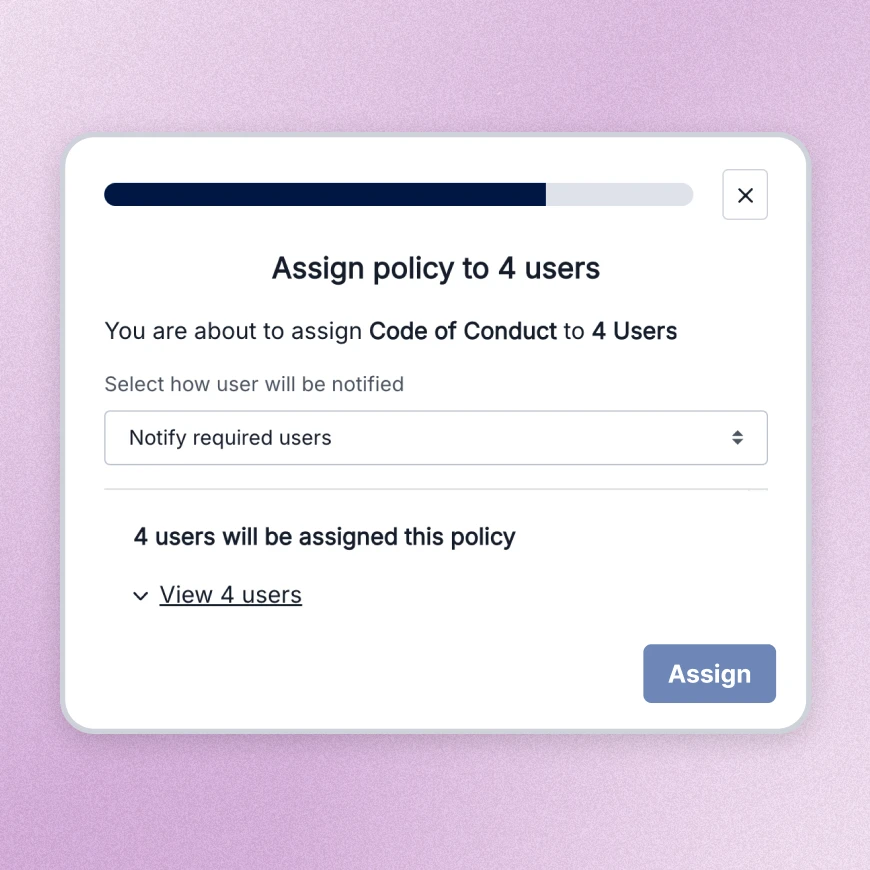
Book a walkthroughMost providers have the policies: infection control, medication management, open disclosure, the Code of Conduct. What they can't produce is evidence that the right people have the current version. Ausmed Policy™ assigns each policy by role and records which version each worker acknowledged, and when.

Staff can find it if they know where to look, and nothing records that anyone did.
In Ausmed Policy™ you assign the policy to each worker, and Ausmed stores their acknowledgement with the date and the version.

A new version goes to everyone, and read receipts, if there are any, sit in one manager's inbox.
Ausmed sends email and push reminders before and after the due date until each worker has acknowledged it.

A printed copy at the nurses' station still shows last year's procedure.
Ausmed Policy™ keeps the version history and shows which version each worker last acknowledged.

The medication policy goes to kitchen staff too, and the people it applies to get lost in the noise.
Assign it only to the job roles that handle medicines, and the list of who still owes an acknowledgement stays short.

A policy due for review two years ago still reads as current, because the date lives in a register nobody opens.
Each policy has an owner and a review date, and policies coming due show in the Policy Review Workroom.

When an auditor asks who has acknowledged the updated infection control policy at one home, someone builds the list by hand.
Ausmed reports acknowledgement by policy, version and location, and the export is ready for the auditor.
A medication policy matters to the people who handle medicines, while the Code of Conduct applies to every worker. Assign each policy by team, role or location in Ausmed Policy™, and its acknowledgement record covers exactly the people it applies to.
See it with your own policiesAssign it to every worker at every home, and track acknowledgement by version each time you update the procedure.
Assign it to the registered nurses, enrolled nurses and care workers who handle medicines, and to no one else.
Every aged care worker acknowledges it at induction, and again whenever you publish a new version.
Assign it to the roles who will use the process when things go wrong, and see who hasn't confirmed it.
Roll out a revised procedure to the home involved, with a due date and a list of who still hasn't acknowledged it.
Each policy carries an owner and a review date, so one that is due for review shows up before it goes stale.
Ausmed Policy™ records who acknowledged a policy, when they did so, and which version they confirmed. Staff acknowledge on the web or in the Ausmed mobile app, so a care worker on a night shift can do it from their phone.
Automatic email and push reminders go out before and after the due date. You open the policy and see who is still outstanding at each home, and the reminders have already gone to them.
Discover Ausmed Policy™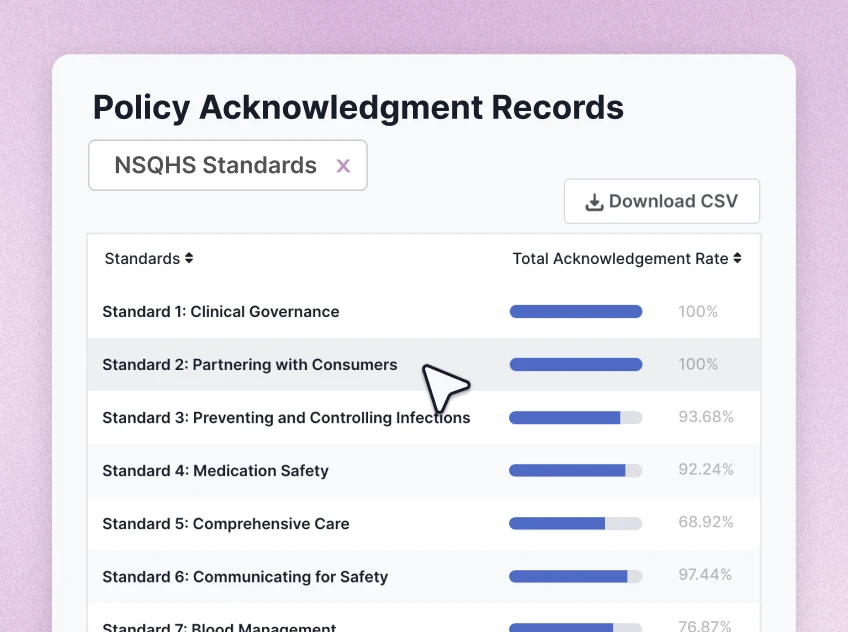
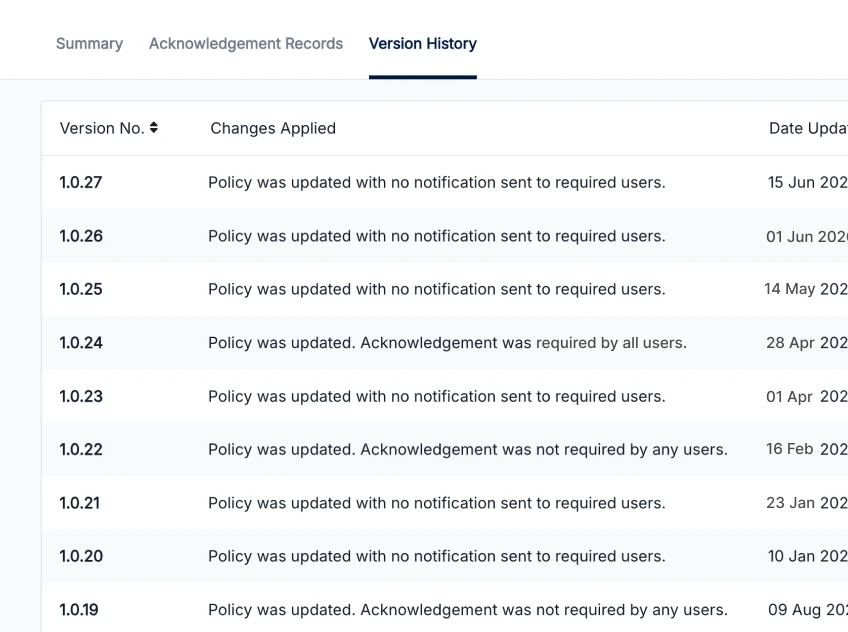
Every policy keeps a full version history showing what changed and when. Publish a new version and past acknowledgements stay on record against the version staff acknowledged. You can then ask staff to acknowledge the one that is now current.
Reports show acknowledgement by version. After a procedure changes, the auditor's question is who has seen the current one - that's just a filter on the report.
After a serious incident or a complaint, the fix is often a revised procedure.
Publish the new version, assign it to the home or team involved with a short due date, and follow up the people who haven't acknowledged it. Where knowing the policy isn't enough, assign targeted training in Ausmed Learn™ to the same people.
Action 2.5.4 asks the provider to support the workforce "including through provision of tools, training and clear policies to prevent, recognise, respond to and report incidents."
When the Commission follows up, one record shows the date the procedure changed, who it went to, who acknowledged it and what they were trained on.
Quality and RiskThe policy register, acknowledgement by version, review dates and reminders, with reporting by standard.
Ausmed Policy™Assign training alongside a policy where staff need to learn the procedure as well as confirm it.
Ausmed Learn™Training on topics your policies cover, such as infection control, SIRS and the Code of Conduct, filtered by Standard.
Ausmed Library™Ausmed Policy™ maps each policy to the Aged Care Quality Standards. Report policy activity against Outcome 2.3, and show an assessor how the register answers this action.
The provider maintains and implements policies and procedures that are current, regularly reviewed, informed by contemporary, evidence-based practice, and are understood and accessible by aged care workers and relevant parties.
The version history shows when each policy last changed, and the owner and review date show when it is next due.
The acknowledgement record shows each worker confirmed the version that applies to them, on the web or in the app.
Where staff need to learn the procedure as well as confirm it, the training you assign in Ausmed Learn™ sits on the same worker's record.
Audit preparednessBring one policy you've changed this year, and we'll show you how its rollout and acknowledgement would look in Ausmed.
No. Ausmed Policy™ works with the policies you already have. You upload them to the register, and Ausmed handles assignment, versions, acknowledgement and reporting.
Yes. You can map policies to standards, including the Aged Care Quality Standards, and report on them by standard.
No. Staff can acknowledge on the web or in the Ausmed mobile app, and reminders arrive by email and push notification.
Past acknowledgements stay on record against the version staff acknowledged, and you can ask staff to acknowledge the new version.
Ausmed is a Trusted Information Partner of Healthdirect Australia. Verify here.