


Ausmed is a Trusted Information Partner of Healthdirect Australia. Verify here.


© 2026 Ausmed Pty Ltd (ABN: 33 107 354 441)
Ausmed holds training, sign-offs and policy acknowledgements on one record per home. You see what happens on shifts you miss, and hand the Commission a report the week it asks.
Book a walkthroughCare workers, educators and assessors make the records on shift, and Ausmed keeps them against each worker. The Audit Report and Board Reports read straight from them.

Scope the Audit Report to the homes under review, and use the Regulatory Standards report for coverage by Standard.

Only the assessors you authorise can sign off clinical skills, as evidence for Action 5.1.3.

Assign SIRS training by role, and send corrective training or a revised procedure to the people involved.

Every authorised assessor at every home uses one observation checklist per competency.

Ausmed produces Board Reports monthly or quarterly from the same records you work from.
Your incident system holds the incident. Ausmed holds what you did about the workforce side of it.

The incident review finds a skill, a procedure or both that didn't hold.

Assign training, a reassessment or the revised policy to the people, team or home involved, with a due date.
Reminders go to each worker, and anything outstanding shows in the Workroom for a manager to act on.
Completion, sign-off and acknowledgement sit on each worker's record, dated.
Scope the Audit Report in Ausmed Analytics™ to the teams and locations under review and choose the requirements in scope. Export what was required, who it applied to and where it is unmet.
Before it goes to the auditor, add a comment against each person with an outstanding requirement. The gaps then arrive with your explanation attached.
For the view by Standard, the Regulatory Standards report in Ausmed Learn™ maps learning records to the Strengthened Aged Care Quality Standards. It shows where your training has coverage and where it has gaps.
How audit preparedness works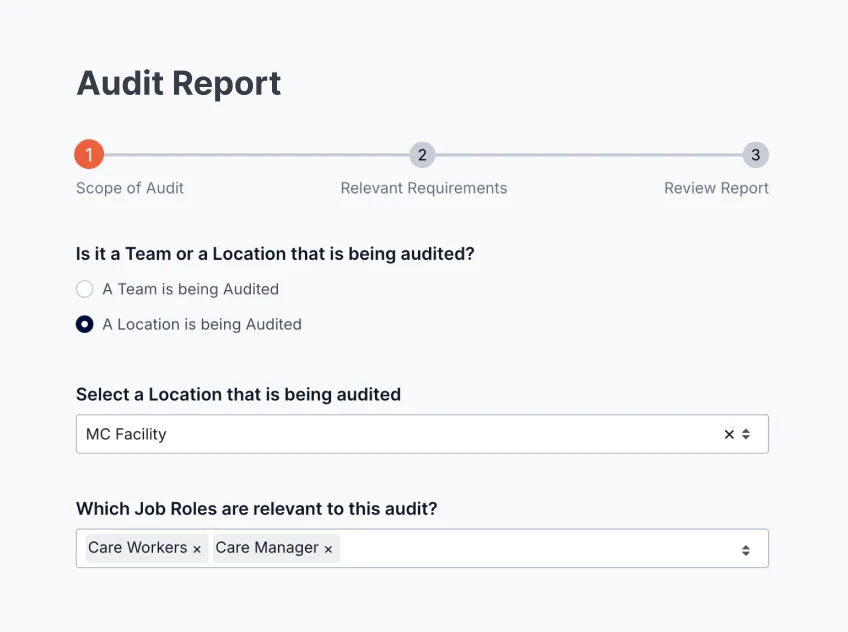
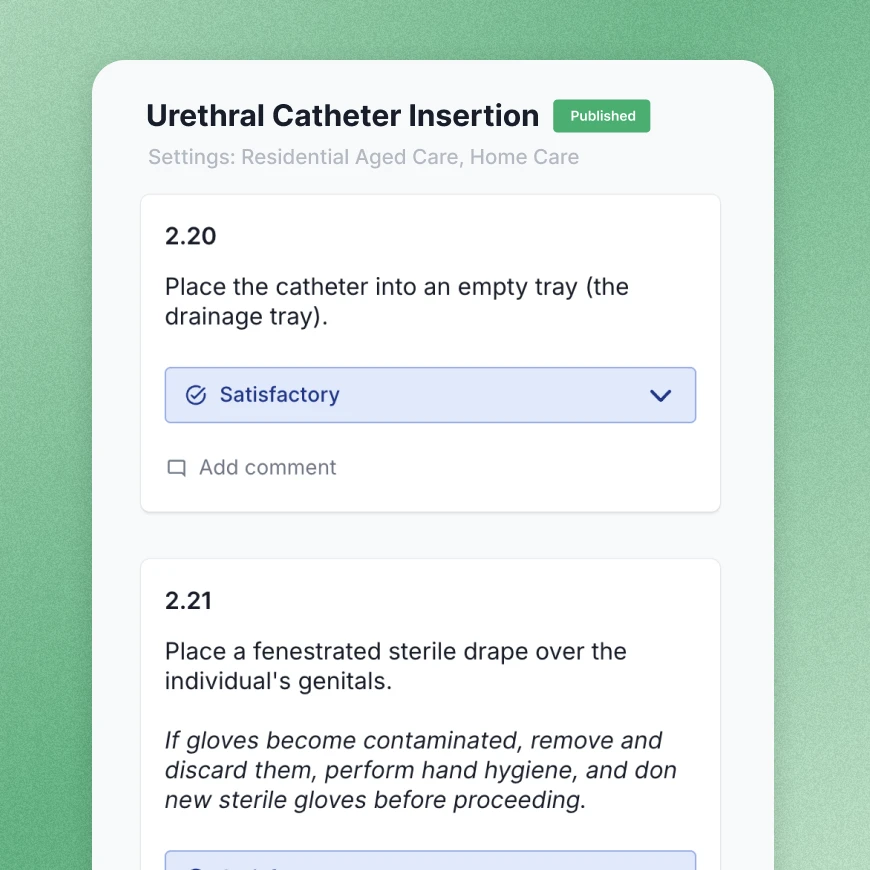
You decide who is authorised to assess each competency, so clinical sign-offs can sit with registered nurses while team leaders assess manual handling.
Every assessor works from the same observation checklist. Ausmed Competency™ records each sign-off with the assessor's name, a date and time stamp and comments.
Dashboards show competent and not yet competent by team, role and location. Ausmed keeps every assessment attempt against the worker, with an audit trail of each action taken.
When an assessor's sign-offs need checking, you can see exactly which workers they assessed and when. For Action 5.1.3, this is the record that shows clinical staff are competent for the work they do.
How in-person assessment worksAusmed Policy™ records who acknowledged a policy, when, and which version they confirmed.
Assign it to the teams, roles or locations it applies to, and reminders go out by email and push notification before and after it falls due. Staff can acknowledge on the web or on their phone.
After an incident, publish the revised procedure as a new version and the earlier acknowledgements stay in its history. The version record then answers the follow-up question from the Commission: who has confirmed the procedure as it reads now.
See policies and procedures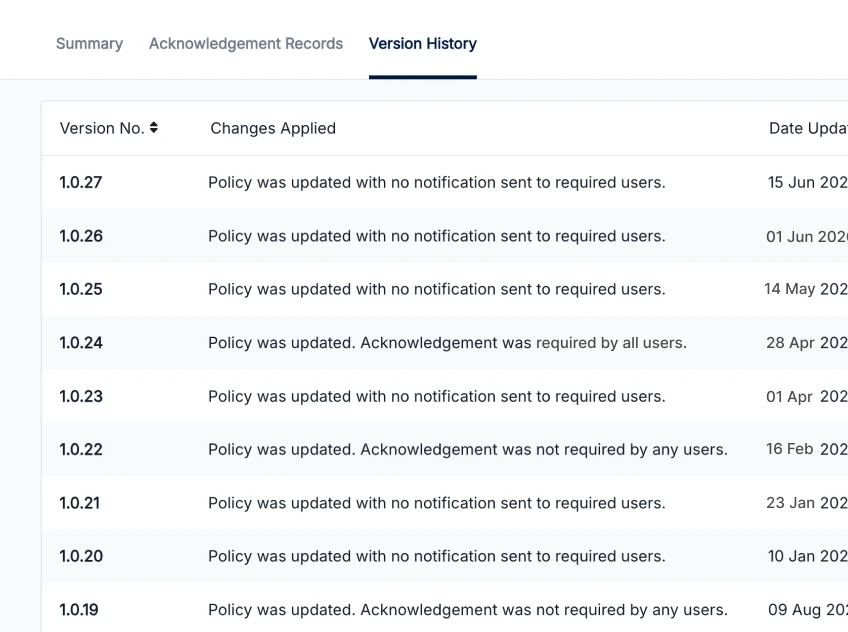
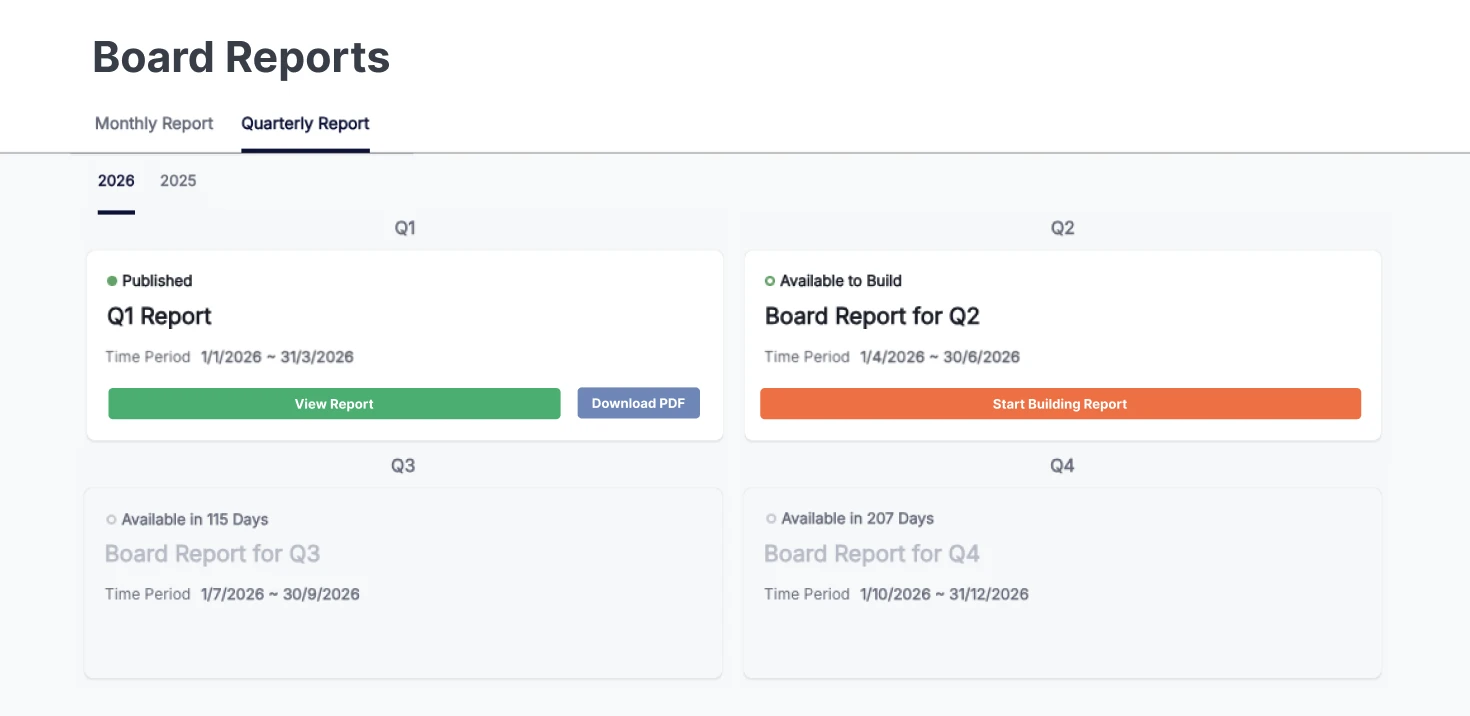
Ausmed Analytics™ produces a Team / Location Report every month for every team and location. Board Reports follow monthly or quarterly on a calendar, covering learning compliance trends, requirement states, extensions and learning hours, ready to download.
Nobody has to remember to build them, which takes the key-person risk out of governance reporting.
They cover training and policy compliance. Clinical indicators, incidents and complaints still come from the systems that hold them, and you bring the two together.
See compliance reporting
After a resident fall, Infinite Care’s clinical team assigned specific falls management modules. SIRS refreshers work the same way, so training follows what happens on the floor.
Across its care homes and more than 1,100 students a year, learning moved from tick-box completion to something staff want to use.
Read the Infinite Care story
What an auditor asks to see, action by action, assembled as you go.
Audit preparednessCompetency sign-off in the same record as online learning.
In-person training and assessmentsIan Wyman, Capability Development and Learning Manager, Infinite Care
Bring your next audit date and one home you're unsure about, and we'll show you what you could produce for it today.
No. Ausmed handles the workforce side of a corrective action: assigning the training, reassessment or revised policy to the right people, and evidencing that it happened. Your incident system stays the system of record for the incident itself.
Yes, for training. The Regulatory Standards report in Ausmed Learn™ maps learning records to the Strengthened Aged Care Quality Standards. You scope the Audit Report in Ausmed Analytics™ by team and location, for the homes and services under audit.
Not on its own. Mapping shows where your training has coverage and where it has gaps. The Commission rates conformance on what you have set up, applied, monitored and improved across each outcome.
You decide, per competency. Some providers restrict clinical sign-offs to registered nurses and let team leaders assess manual handling. You set permission on the competency, so it doesn't depend on a job title alone.
Ausmed is a Trusted Information Partner of Healthdirect Australia. Verify here.