

Ausmed is a Trusted Information Partner of Healthdirect Australia. Verify here.


© 2026 Ausmed Pty Ltd (ABN: 33 107 354 441)
For health services expanding Hospital in the Home, widening PCA roles or moving clinicians to the top of their scope. Ausmed assigns the new training and procedures to everyone in the role. Approved assessors sign each person off, and the record keeps up as the scope moves again.
Book a walkthroughHospital in the Home is admitted acute care: patients stay hospital inpatients while nurses, doctors and allied health treat them at home. Victoria has 49 HITH service sites and has invested $819 million in Better at Home. As clinicians move to the top of their scope and PCAs take on more on the wards, a committee widens a role in one meeting, and the evidence builds one sign-off at a time.

The service rewrites the position description for the wider scope, but the training system still assigns what the old role needed.
Set the widened role up as its own job role in Ausmed Learn™, with its own training plan. Everyone you move into it picks up the new requirements.

A new skill goes onto the roster the week it is approved, before an assessor has seen some staff do it.
The Competency dashboard shows who in the role is signed off and who is still waiting, ward by ward.

One unit lets PCAs do a task and the next does not.
Assign requirements by job role and location, so you write each ward's version of the role down in one place and staff who move see the right list.

An extended skill needs an assessor who holds it, and early in a change there are few of them.
Approve assessors per competency in Ausmed Competency™, and only those people can record the sign-off.

A skill used rarely fades.
Recurring assignment brings the assessment back on the cycle you set, with reminders that escalate to the person's manager.

The service updates a procedure, or a new device arrives.
Ausmed Policy™ sends the revised procedure to the role and records who acknowledged which version, and a change to the role's training plan reaches everyone in it.
Set the wider scope up as its own job role, with the training plan, the procedures to acknowledge and the competency assessments it needs.
When your HR system moves someone into the role, user sync carries the change across and they pick up its requirements. Nobody builds a list.
An approved assessor observes the skill in the assessor app and records Competent or Not Yet Competent, with their name, the date and time and comments. A Not Yet Competent result goes into the action log for follow-up.
Recurring assignment brings reassessment back on schedule. When the scope changes again, update the role once, and reports by team, role and location show who holds the current scope.
Build the assessments for each expanded skill from your own procedures, and set who you approve to assess each one. If your rule is that an assessor must be competent in the skill themselves, you approve only assessors who meet it.
For a PCA taking on a new task in a team nursing model, the record shows the task, the assessor, the date and time and the result, with an optional co-signer.
Digitising paper-based competencies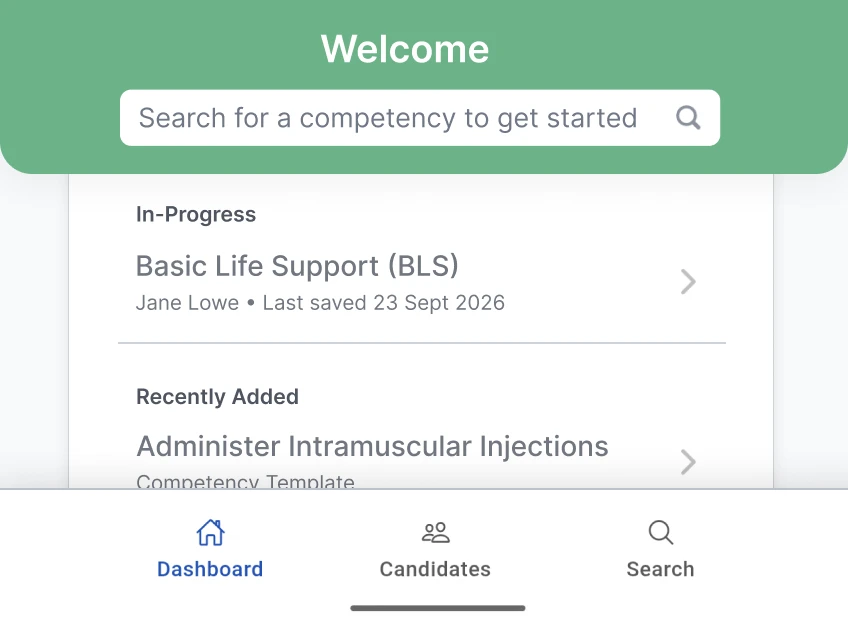
Curriculum developer, clinical education, private hospital

Scopes keep moving. A new device arrives, a procedure changes or the committee adds a task to a role.
You assign training plans by job role and location, so a change to the role's plan reaches everyone in it. Reminders go out as items fall due, and escalate to managers when they are overdue.
Revised procedures go out through Ausmed Policy™ to the staff they apply to. Ausmed records each acknowledgement against the version read, and reminders follow up anyone who hasn't acknowledged it before their next shift in the role.
Automation and EfficiencyHITH nurses and allied health clinicians work away from a ward computer. Their assigned modules are on the Ausmed mobile app. They can complete training for a widened role between visits, and it lands on the same record as everything else.
Skills that need hands-on practice, such as a new infusion device, run as in-person Events in Ausmed Learn™. Staff enrol or join the waitlist, and Ausmed writes attendance to their record.
Ausmed Learn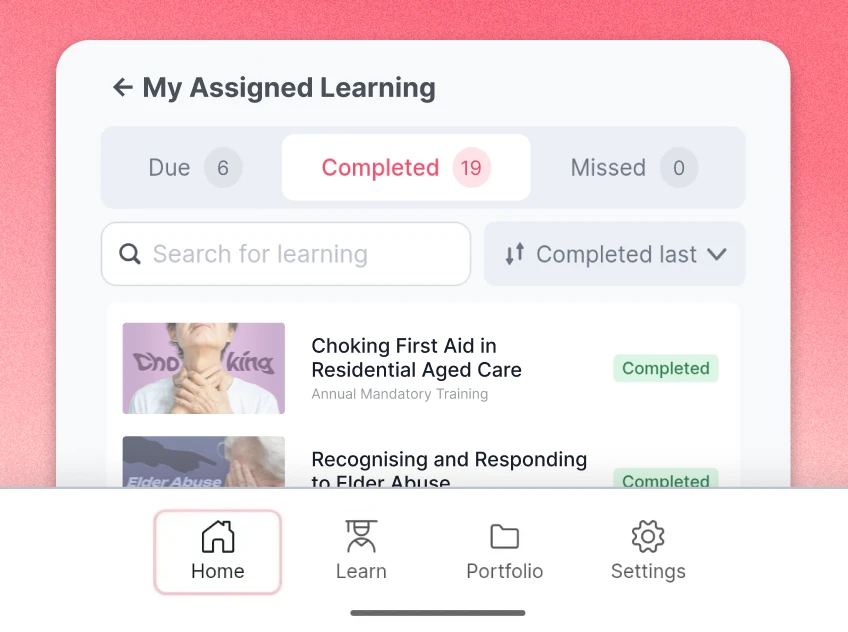
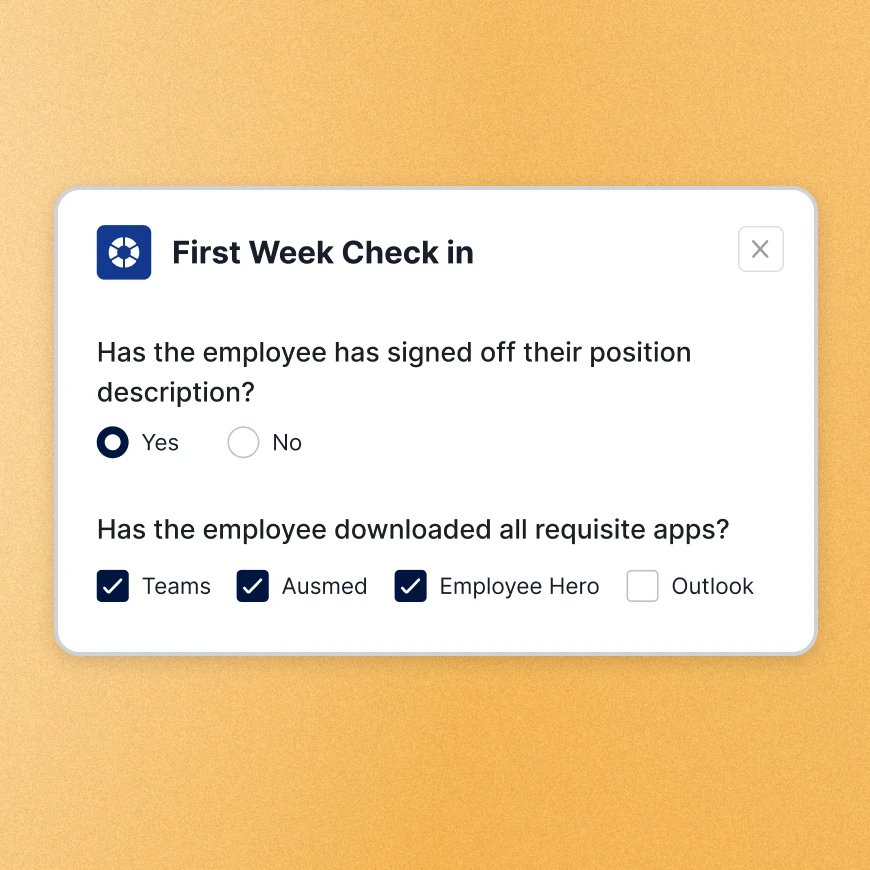
HITH clinicians spend the shift in patients' homes, often on their own, and their manager sees little of their practice first-hand. Ausmed Perform™ schedules regular catch-ups and reviews for each of them, and reminds the people involved.
Managers record each conversation and any feedback against the clinician, whether it happened on a home visit or by phone, with notes and evidence attached. The clinician sees the feedback they have received, and a training need raised for the wider scope is assigned on the same staff record.
How Ausmed Perform worksGive the widened role its own training plan, assign it from your HR system and bring it back on schedule.
Ausmed Learn™Let approved assessors sign off each extended skill, and track Not Yet Competent results in the action log.
Ausmed Competency™Schedule catch-ups and reviews for clinicians working away from the ward, and record each conversation against them.
Ausmed Perform™ NSQHS Standards, second edition · Actions 1.23 and 1.24
Action 1.23 asks each health service to define the scope of clinical practice for its clinicians, monitor that they practise within it, and review it periodically and whenever a new clinical service, procedure or technology is introduced or substantially altered.
Expanding HITH is that kind of change. HITH patients remain admitted inpatients under their hospital doctor's care, so the service sits inside the same clinical governance as the wards. The scope decision and credentialing stay with your committees, and Credentials holds each clinician's registrations and clearances on the same record.
The health service organisation has processes to:
a. Define the scope of clinical practice for clinicians, considering the clinical service capacity of the organisation and clinical services plan
b. Monitor clinicians’ practices to ensure that they are operating within their designated scope of clinical practice
c. Review the scope of clinical practice of clinicians periodically and whenever a new clinical service, procedure or technology is introduced or substantially altered
Ausmed holds what sits behind each decision. For any clinician, that is the role they hold, the training completed for it, each competency result with the assessor's name and date, and the version of each procedure they acknowledged.
The Audit Report puts that in front of an assessor, person by person, with timestamps.
For clinical governance leadsTell us which roles are widening in your service, and we'll show you how the training and sign-off for one of them would run.
No. Credentialing and scope decisions stay with your credentialing committee and clinical governance structures. Ausmed holds the training, competency assessment and policy acknowledgement that sit behind each person's scope.
No. Ausmed wrote its competency templates for aged care. Hospitals set up their own assessments in Ausmed Competency™, written for their own procedures and scope decisions.
Queensland Health's does. Its HITH standards of care guideline expects staff to have “the appropriate competence and expertise, with training/competencies tailored to the community setting”.
NSW's policy directive makes HITH an admitted service aligned to existing clinical governance structures, and asks services to assess the risk to workers visiting homes.
Victoria's HITH guidelines (2011) cover governance, staffing models, policies and practices, and the Department of Health says most of their content still applies until it publishes updated guidance.
Ausmed is a Trusted Information Partner of Healthdirect Australia. Verify here.