

Ausmed is a Trusted Information Partner of Healthdirect Australia. Verify here.


© 2026 Ausmed Pty Ltd (ABN: 33 107 354 441)
For local health districts, Hospital and Health Services and other public health services. Ausmed works alongside your statewide learning system. Start by delivering Library content into it as SCORM, moving one department's competencies off paper, running one program in Ausmed, or trying AI Simulations in a single service.
Book a walkthroughEvery public hospital must hold accreditation to the eight NSQHS Standards (second edition), and since 1 July 2023 accrediting agencies have assessed them at short notice. The Clinical Governance Standard puts the workforce at the centre of that, in one sentence.
The workforce has the right qualifications, skills and supervision to provide safe, high-quality health care to patients.
Orientation, mandatory training, performance review, scope of practice, credentialing and supervision each need evidence. In NSW and Queensland, staff already log in to a statewide learning system.
Ausmed fits around it all. Library modules run inside it as SCORM. A department that needs competency sign-offs, or a program the state system doesn't handle, runs that part in Ausmed and reports it by NSQHS Standard.
In public hospitals the harder problems often sit in a statewide LMS that can't change and procurement that moves slowly. Ausmed works alongside the state's system and can start with one department.

The state bought the learning system and took years to negotiate it. A department that needs something it does not do has to work alongside it.
Ausmed Library™ modules run as SCORM packages inside it, and staff stay in the system they already log in to.

Staff data in a new system raises questions about who can see what, and privacy and governance teams need answers before a pilot.
Ausmed's information security management system is certified to ISO 27001. Staff sign in with single sign-on, and reporting lines decide which staff each manager sees.

A facilitator marks off paper assessments, an administration officer marks them off again, and nobody tracks some of them centrally at all.
In Ausmed Competency™ the facilitator records the sign-off once, in the assessor app, and it lands on the clinician's record.

Networks or the state set budgets, and a department with a clear problem can wait a long time for a decision.
Ausmed starts with one department and one problem, and grows when the pilot has shown what it changes.

Some educators tell us their area gets a set allocation of paid time for mandatory training each year.
Where training runs in Ausmed, a nurse who already knows a module passes its Knowledge Verification pre-test and moves on. The paid hours go to what they don't know.

Educators on different shifts hand a learner's progress over in end-of-shift notes, and the next educator comes in early to read them.
Run one graduate or transition program in Ausmed, and each sign-off lands on the learner's record for the next educator to open.
Nurse Educator, emergency department, public hospital
We can deliver Library modules as SCORM packages into a statewide learning system. Staff stay in the platform they log in to every day, and completions land in the record the state already holds.
Access more than 1,000 Hospital and Acute Care resources mapped to the NSQHS Standards. Ausmed's T.R.U.S.T.E.D. framework governs each one, each shows its review date, and modules have closed captions in eight languages besides English.
Your education team gets current clinical content without maintaining it.
Training Library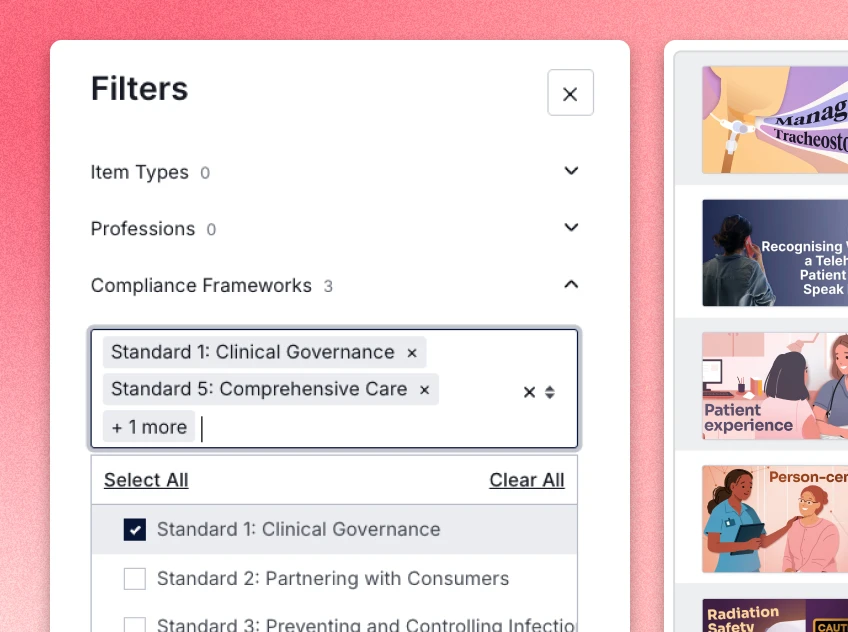
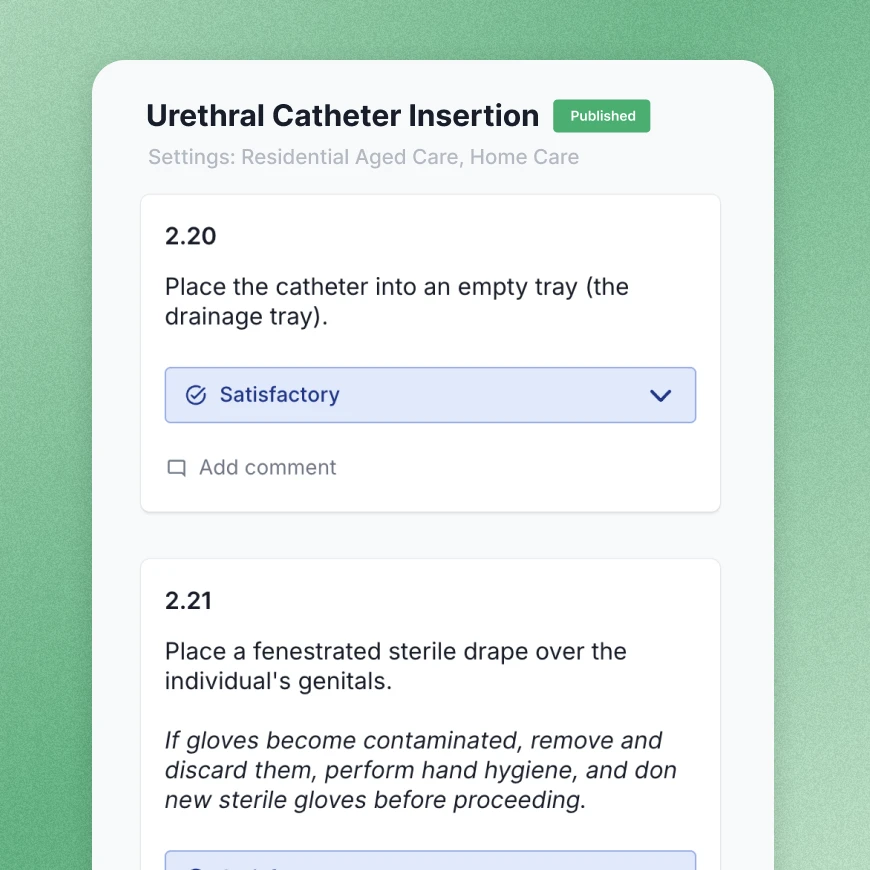
Start with the department where paper hurts most. Build its assessment tools in Ausmed Competency™ from the forms it already uses, choose the approved assessors, and they sign off on the unit in the assessor app.
Each sign-off records the assessor, the date and time and the result, Competent or Not Yet Competent. The department's educator sees who is signed off and who isn't on one dashboard, and nobody marks anything off twice.
Digitising paper-based competenciesAusmed's information security management system is certified to ISO 27001. Staff sign in through your identity provider with single sign-on. Reporting lines set who reports to whom, so each manager sees and acts on the record of the people they are responsible for.
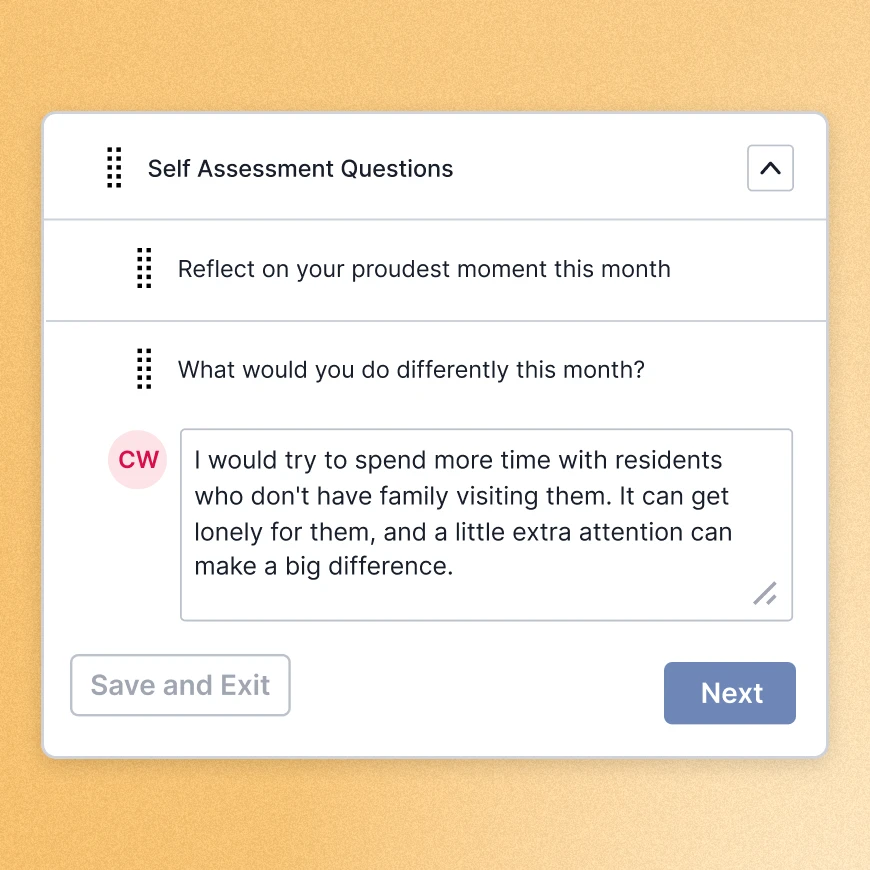
Action 1.22 asks for regular performance review that identifies training needs. Ausmed Perform™ can run one department's review program without touching the state's systems.
Staff complete a self-assessment before the conversation. The manager records the review in Perform, with notes and evidence attached.
The educator assigns any follow-up from that record, and Perform shows who in the department has had their review and who is due.
Discover Ausmed Perform™Public health services seldom change platforms in one move. Ausmed can start with one department and one problem, alongside the statewide system, and grow once there's evidence of improvement.

Deliver mandatory training content mapped to the NSQHS Standards into your existing LMS as SCORM.
Training Library
Move one department's competencies off paper, and record each sign-off against the clinician.
Digitising Paper-based Competencies
Run one graduate or transition program in Ausmed, and record sign-offs on the unit.
Learning Management
Let one service practise the hard conversations, by voice or text on a phone, without a statewide rollout.
AI SimulationsMore than 1,000 Hospital and Acute Care resources mapped to the NSQHS Standards, in Ausmed Learn™ or as SCORM in your own LMS.
Ausmed Library™Assign training plans and send reminders, with reports by team, role or Standard, once a service is ready to run its training in Ausmed.
Ausmed Learn™Bring one department and one problem, and we'll show you what a pilot alongside your statewide system would look like.
No. We can deliver Ausmed Library content as SCORM packages into the LMS you already run. Ausmed Learn™ is there if a department or service wants to run training, competency and reporting in Ausmed itself.
Ausmed's information security management system is certified to ISO 27001, and your IT team can ask for security documentation during evaluation. We answer questions from privacy and governance teams in writing before a pilot starts.
Yes. Reporting lines set who reports to whom, so each manager sees and acts on the compliance of the people they are responsible for.
The second edition, which accrediting agencies assess against now. The third edition is a draft, and assessment against it is not due to start until 2030.
Ausmed is a Trusted Information Partner of Healthdirect Australia. Verify here.