

Ausmed is a Trusted Information Partner of Healthdirect Australia. Verify here.


© 2026 Ausmed Pty Ltd (ABN: 33 107 354 441)
For nurse educators and L&D leads in hospitals and health services. Ausmed assigns and chases mandatory training by rule and fills the content gaps your team can't keep up with, so educators get back to the ward.
Book a walkthrough
Set training plans by job role and location, and recurring assignment re-assigns them each cycle.

Set up each stage of the program as a training plan, with sign-offs from the assessor app on the same record.

Approve assessors per competency, and they record results on the ward the day they observe.

Clinicians choose Library learning for their own practice and record it in the CPD portfolio on the Ausmed mobile app.

Run practical sessions as Events, and Ausmed writes enrolment, waitlists and attendance to the learner's record.

Library videos carry captions in eight languages, for staff whose first language isn't English.
Ausmed Learn™ assigns training automatically from each person's position and sends reminder emails as requirements fall due and go overdue, with escalation to managers. Managers get their own reminders for what is open, due and overdue in their team.
Education is left with one filtered list in the Workroom, and handles reminders and extensions from it, in place of a monthly round of emails to unit managers.
Ausmed Learn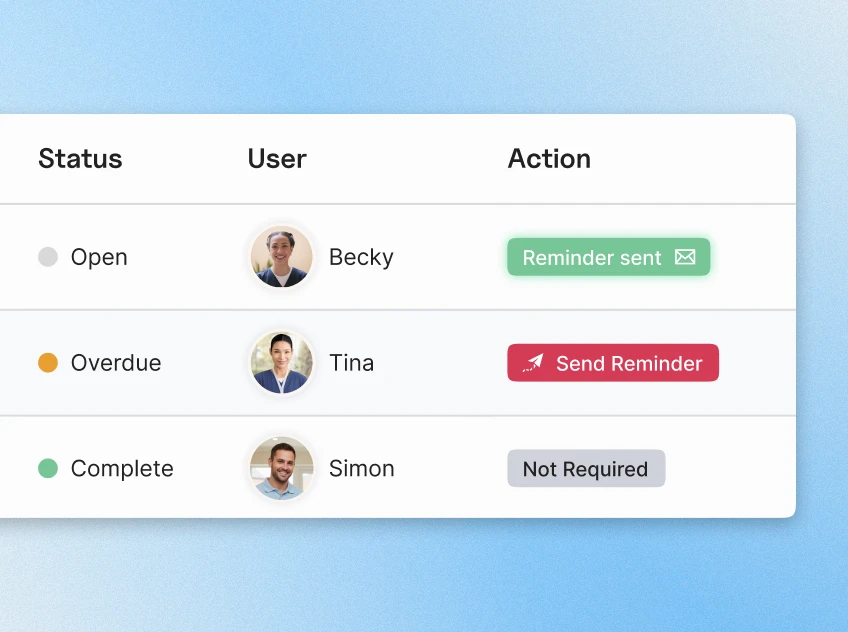
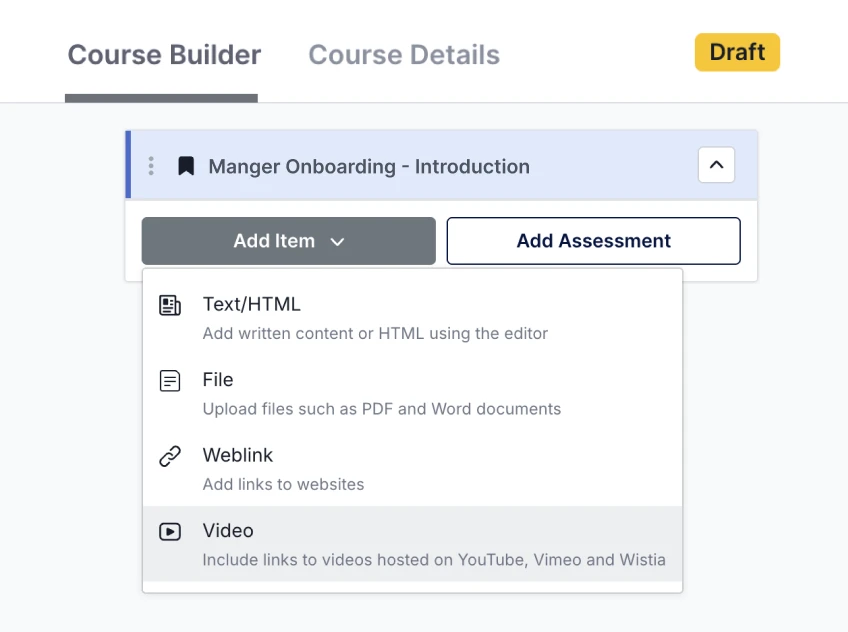
Hospitals hold on to their own education because it is written around their own procedures, equipment and patients.
Course Builder turns existing videos, documents and assessments into courses, and you upload SCORM packages you already own as they are. You assign all of it through the same training plans as everything else.
Where you have nothing, or what you have is out of date, the Ausmed Library™ fills the gap. Training plan templates for acute induction and annual mandatory training give you a starting point to adjust.
Training LibraryGraduate consolidation, preceptor observation rounds and return-to-practice checks run in Ausmed Competency™. The assessor records Competent or Not Yet Competent in the assessor app with their comments, and it lands on the graduate's record when they submit it.
A Not Yet Competent result goes into the action log with the training that closes the gap, so the coordinator can see what was agreed and when the graduate is due back for reassessment.
Digitising paper-based competencies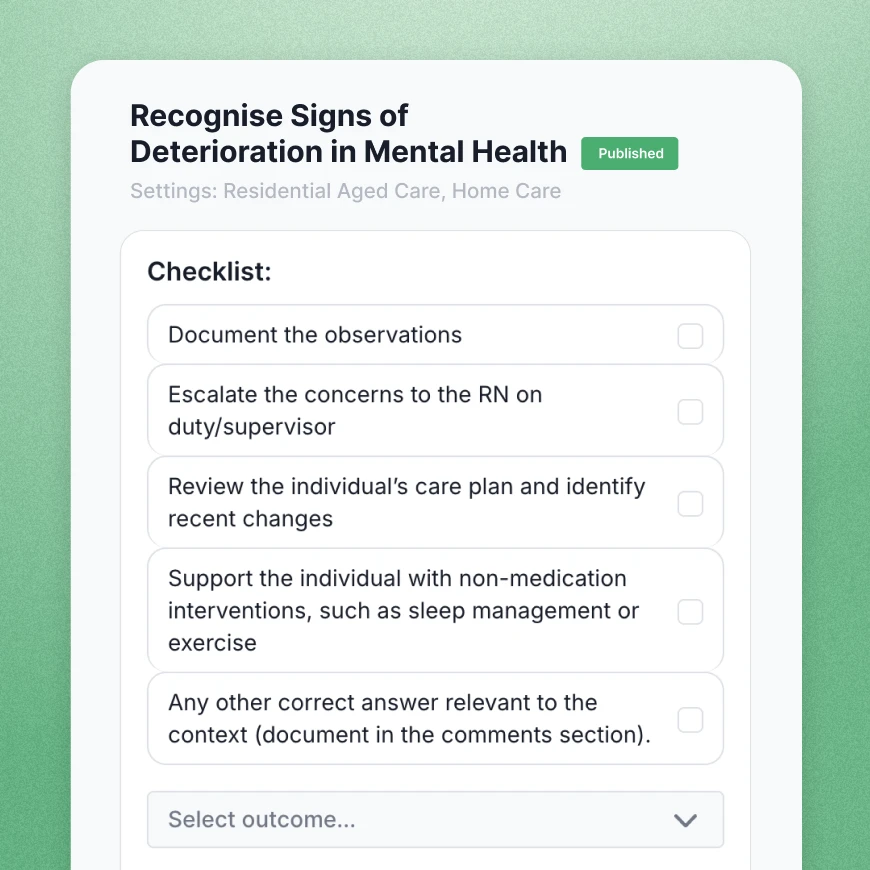
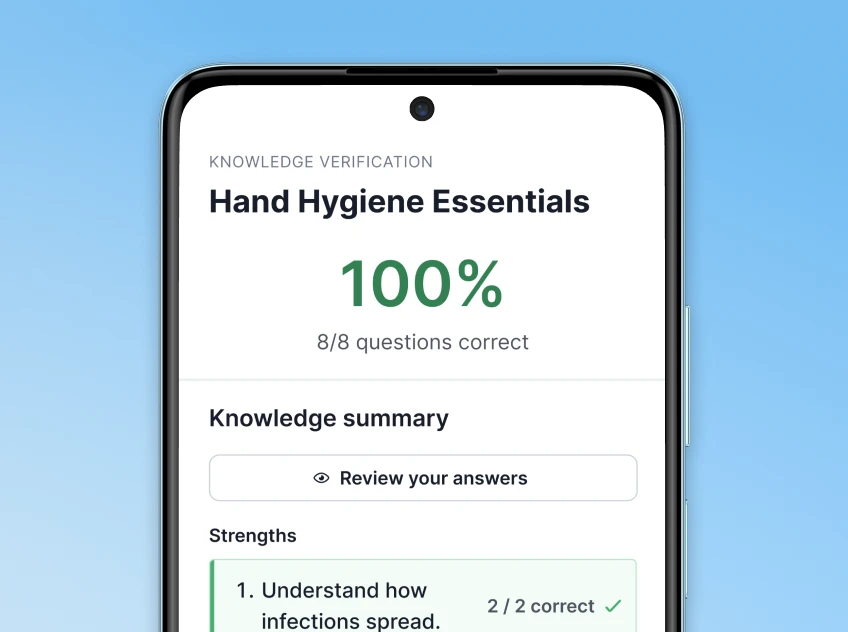
Knowledge Verification puts a pre-test at the start of an eligible module. Staff who show they know the content move past it, and those who don't complete the module. The program gets shorter, and you keep a record of who showed what they know.
You switch it on module by module, so a topic you want everyone to sit in full, such as advanced life support, stays compulsory.
Knowledge VerificationMap mandatory training to the NSQHS Standards, and offer CPD relevant to each clinician's practice.
Training Library
Run assignment and reminders on rules, and cut repeat hours from the mandatory program.
Automation and EfficiencyRun graduate and transition programs, and record each sign-off on the unit as it happens.
Learning ManagementNurse educator, perioperative department, private hospital
Bring your mandatory training list, and we'll show you which parts of it Ausmed can take off your team's hands.
Yes. You assign your own documents, videos and SCORM packages through the same plans as Library content, so you aren't choosing between your material and ours.
Ausmed's T.R.U.S.T.E.D. framework governs every resource, and each one carries clear learning objectives, references and a review date. You can check how recent it is before you assign it.
Some of it can, if it is relevant to the nurse or midwife’s context of practice and includes new learning.
Routine refreshers don't: in the NMBA’s words, “routine annual CPR and mandatory fire training education cannot be counted”. So CPD sits beside the mandatory program as a separate requirement.
Ausmed is a Trusted Information Partner of Healthdirect Australia. Verify here.