

Ausmed is a Trusted Information Partner of Healthdirect Australia. Verify here.


© 2026 Ausmed Pty Ltd (ABN: 33 107 354 441)
For clinical governance, quality and education leads, as experienced staff leave and juniors carry more of the roster. Ausmed puts each clinician's training, observed sign-offs and acknowledged procedures on one record. The right person goes to the right place at the right time on evidence instead of memory.
Book a walkthroughGetting the right person to the right place at the right time used to rest on what senior staff knew about their unit.
A completion report can't tell the nurse in charge who an assessor has observed on the infusion pump, or who was rated not yet competent last month and what happened next. It can't say whether anyone has signed off tonight's casual on anything.
Ausmed records competency where it happens. An approved assessor signs off on a unit, and Ausmed keeps a Not Yet Competent result with its follow-up. The clinician's record shows their training, sign-offs and acknowledged procedures together.
A gap shows up in a report before an incident review finds it.
A completion record can look fine until someone asks about one clinician on one night shift. Ausmed Competency™ records the observed sign-off, Not Yet Competent results included, so the gap shows before the roster depends on it.

The module is done, so the requirement shows green, and the record can't show whether anyone watched the clinician do the task.
Ausmed Competency™ adds an observed sign-off against your own assessment tool, made by a named assessor.

The assessor sets a not yet competent result aside, reassesses the clinician later and records only the pass.
Ausmed records Not Yet Competent the same way as a pass and keeps it beside the reassessment, with the follow-up in the action log.

Someone prints, signs, scans, uploads and submits a paper sign-off, and with that many steps it often doesn't happen.
In the assessor app the assessor records the result on the unit at the time of the observation, with nothing to scan or upload.

Graduates and newly transitioned staff take on more of the roster, and managers take their readiness on trust.
Each clinician's record in Ausmed shows which competencies are signed off and which are still open, for whoever is making the call.

Assessment happens when something has gone wrong or someone has noticed.
Assign competencies to each role with a due window and a recertification cycle, and reassessment comes round on a schedule you can show an assessor.

Night and weekend shifts run on thinner staffing and more casuals, and nobody can quickly see who on the shift is signed off for what.
Competency dashboards show Competent and Not Yet Competent by team, role and location. A ward's position is one filter away.
Clinical education, private hospital group
In Ausmed, signed off means a named, approved assessor watched the clinician do the task against your own tool and recorded the result with the date and time.
See it with your own unitsA named assessor assesses cannulation, catheterisation or wound care on the unit in the assessor app, against your own procedure.
Sign off infusion pumps, syringe drivers and lifting equipment against the equipment your units use, and bring each back on a recertification cycle.
For high-risk medicines, a Knowledge Verification check, an observed medication round in Ausmed Competency™ and an acknowledged administration policy, on one record.
You choose who can assess each competency, so the name on the sign-off belongs to someone you approved to make it.
Clinicians back from extended leave, or returning to a specialty, get a check and a sign-off before they pick up the work again.
Send a revised procedure through Ausmed Policy™ to the staff it applies to, and record each acknowledgement against the version.
Hospitals already have competency tools, usually written by the clinical nurse educators who use them. Build them in Ausmed Competency™ with observable criteria, set the role each one applies to, and choose which assessors can sign it off.
The assessor records the result in the assessor app on the unit, at the time of the observation: Competent or Not Yet Competent. The record carries the assessor's name, the date and time, their comments and an optional co-signer. Nobody re-keys it later.
Digitising paper-based competencies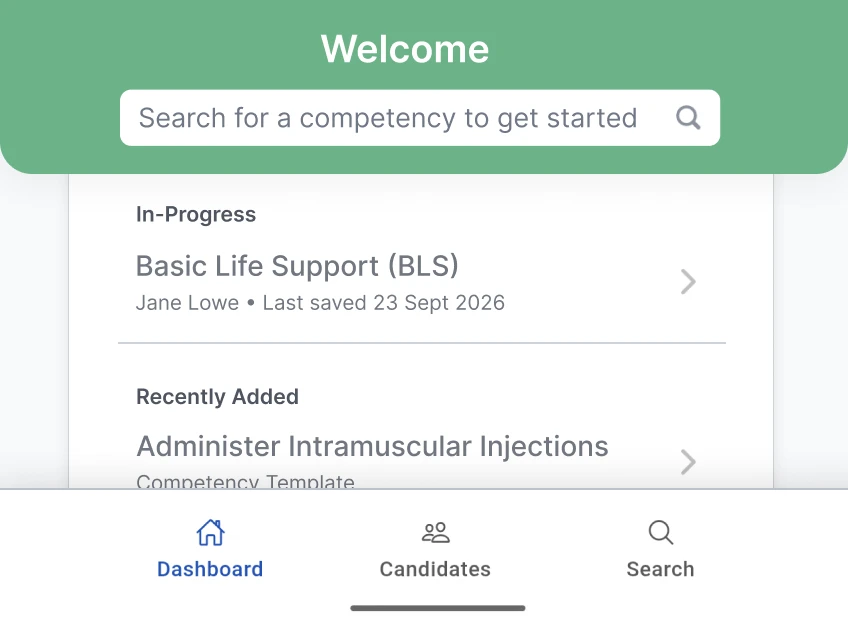
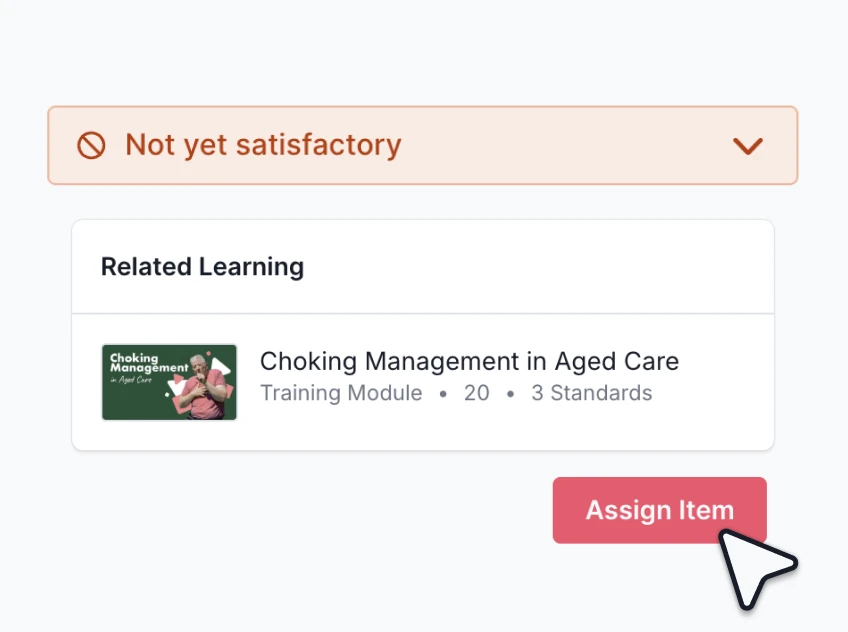
Ausmed records a Not Yet Competent result against the clinician in the same way as a pass. It shows on the competency dashboard by team, role and location, and links the clinician to the training that addresses the gap.
The follow-up goes in the action log: the training assigned and when the reassessment is due. When the assessor reassesses the clinician, the earlier result stays on file next to the new one. The record shows when they weren't yet competent, and what happened next.
For clinical governanceEach clinician's record holds their training, their competency sign-offs and the procedures they have acknowledged. A manager with access can check what a casual or a newly transitioned nurse has been signed off for, and what is still open, before moving them to another ward.
For governance, the same record runs as a report. Competency results filter to any team or location, and the Audit Report shows one person's requirements with timestamps and links to evidence.
Compliance reporting by ward, unit and facility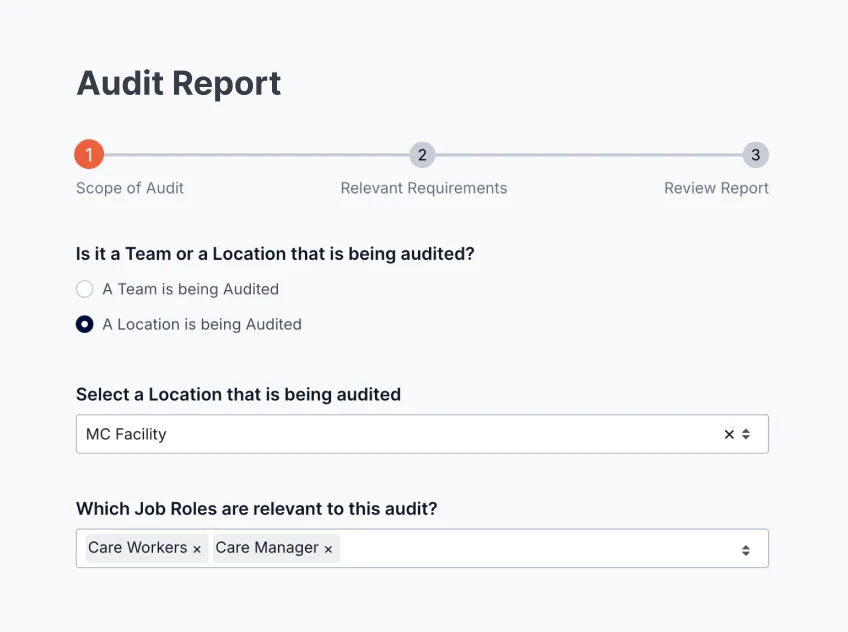
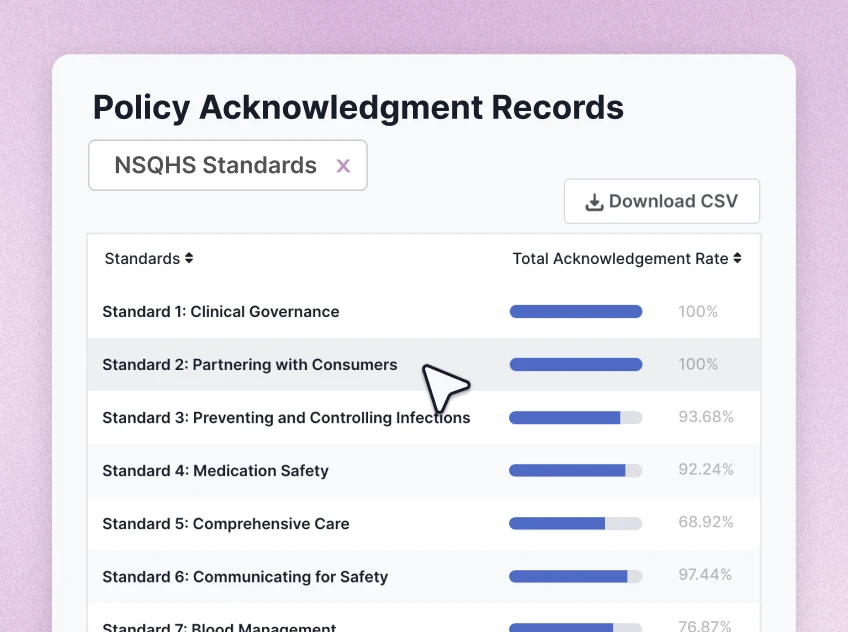
When a procedure changes, send it to the staff it applies to and see who has acknowledged the current version, by team and role. Reminders go to anyone who hasn't.
Ausmed assigns acknowledgements automatically to staff who join through your HR integration, an invitation or single sign-on.
Link the policy to the training that goes with it, so a revised procedure and the module that teaches it reach the same people.
How Ausmed Policy worksRecord observed sign-offs on your own assessment tools, and keep Not Yet Competent results and their action log on the record.
Ausmed Competency™The training before an assessment, the training a gap links to after one, and one record per clinician.
Ausmed Learn™Send revised procedures to the staff they apply to, and track acknowledgement by version.
Ausmed Policy™The workforce actions in the Clinical Governance Standard sit under one criterion, Clinical performance and effectiveness, and its intent names skills and supervision.
The workforce has the right qualifications, skills and supervision to provide safe, high-quality health care to patients.
Qualifications sit in your HR and credentialing records. Ausmed produces the other two from the assessment itself.
Each sign-off records the skill observed, the approved assessor who watched it, the date and the result. A Not Yet Competent result keeps its action log of what followed. Filter the sign-offs to the team or location a ward is set up as, and that ward's evidence is one report.
Action by action: what an assessor asks to seeBring one competency your units still do on paper, and we'll show you the sign-off, the Not Yet Competent record and the report in Ausmed.
Not as a hospital library. You build your own competency tools in Ausmed Competency™, so each assessment is written to your procedures and the equipment your units use.
You decide, per competency. Many hospitals require an assessor to be competent in the skill themselves. You approve the assessors for each competency, and their name is on every sign-off they make.
Reports run by team, location and role. Most hospitals set wards and units up as teams or locations, so a ward view is a filter on the same report.
No. Staff still report incidents in your incident management system. Ausmed holds the training, competency and policy side of the response, and a manager can record the follow-up in a Perform note on the staff member's record.
Ausmed is a Trusted Information Partner of Healthdirect Australia. Verify here.